An AI marketing course should teach marketers to run a campaign workflow, not collect a longer list of prompts.
By the end, a participant should be able to research an audience, write a campaign brief, create branded assets, prepare the campaign setup, define measurement, and save the process so it can be run again.
The tools matter. The workflow matters more.
The quick answer
A useful AI marketing course should cover seven capabilities:
- Turn a business goal into a clear campaign brief.
- Research the audience and check the sources.
- Build reusable brand and offer context.
- Create copy and visual variants with a clear reason for each.
- Prepare campaign setup and measurement.
- Review the output for accuracy, brand fit and risk.
- Save the process as a reusable marketing workflow.
If the course spends most of its time touring tools, participants may enjoy the day and still return to the same campaign process on Monday.
The seven capabilities in detail
Here is what each capability covers in practice.
1. Start with the campaign decision
AI cannot rescue a campaign that has no clear audience, offer or objective.
Participants should learn to turn a vague request into a short working brief. It should name:
- The business goal.
- The audience.
- The offer.
- The customer problem or desire.
- The campaign angle.
- The required assets.
- The action the audience should take.
- The evidence that will be used to judge the result.
This is the first useful AI skill: structuring the work before asking the model to produce it.
2. Research with sources, not confident-looking summaries
Marketers use AI for customer research, competitor scans, message testing and content planning. The speed is useful. The risk is that an unsupported answer can look finished.
A course should teach participants to separate three things:
- What a source states.
- What the AI inferred.
- What the marketer recommends.
The participant should know when to open the source, check the date, compare claims and reject weak evidence. They should also know when first-party information, such as customer interviews, campaign data or sales notes, is more valuable than another web summary.
The output should be a usable audience insight note, not a page of generic personas.
3. Build an AI brand kit
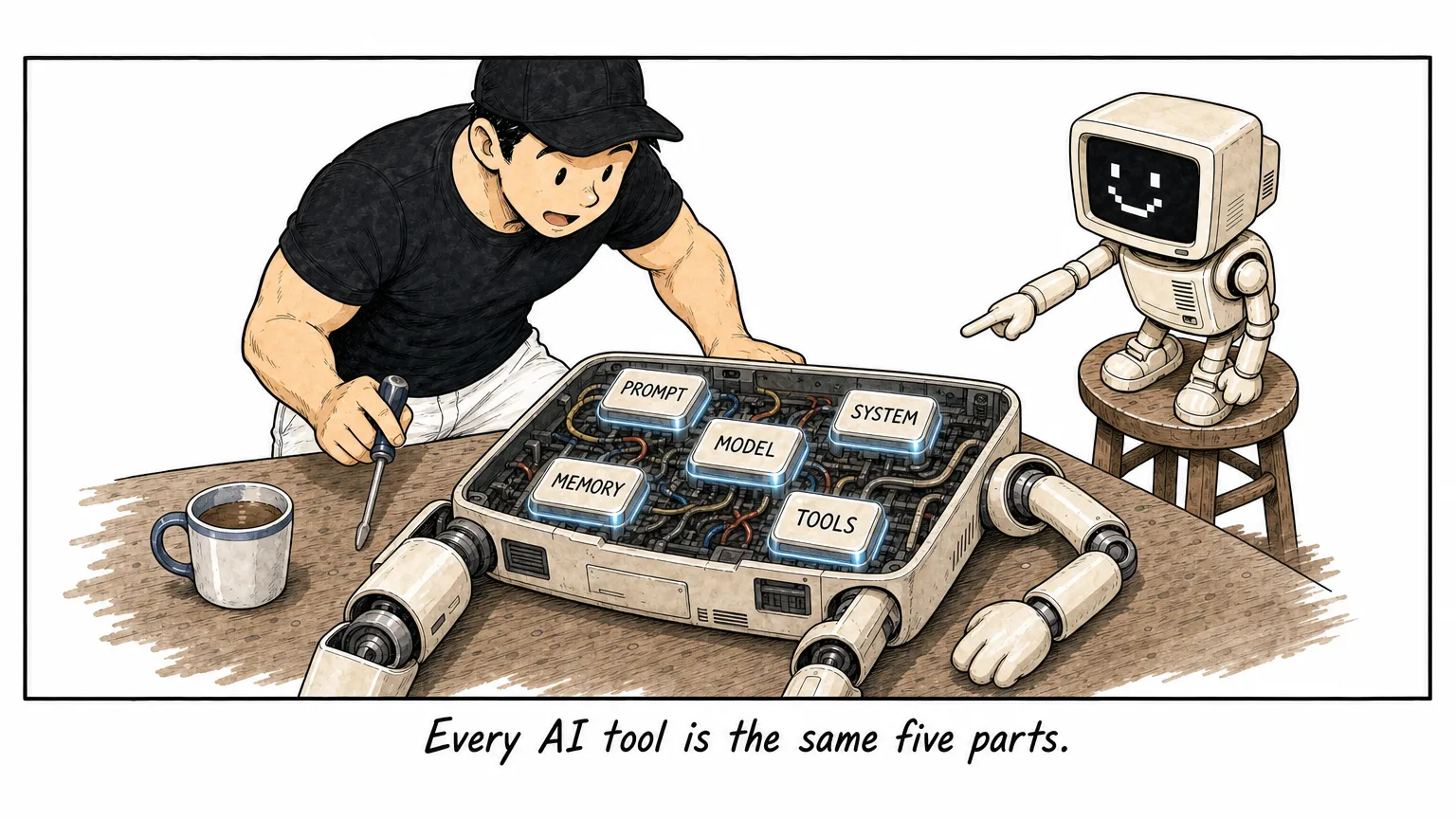
Most weak AI content is not caused by a missing prompt trick. The model does not have enough useful context. Context is one of the five building blocks of every AI tool, and it is the one most marketers skip.
A marketing course should show participants how to organise a simple brand kit containing:
- Company and product facts.
- Audience pains, desires, objections and language.
- Offer details and proof.
- Voice examples and writing rules.
- Visual direction and approved assets.
This context should be easy to update and reuse. The goal is to stop every task from beginning with another long explanation of the brand.
Participants should also decide which files are safe to use, which details are confidential, and what requires approval before it enters an external tool.
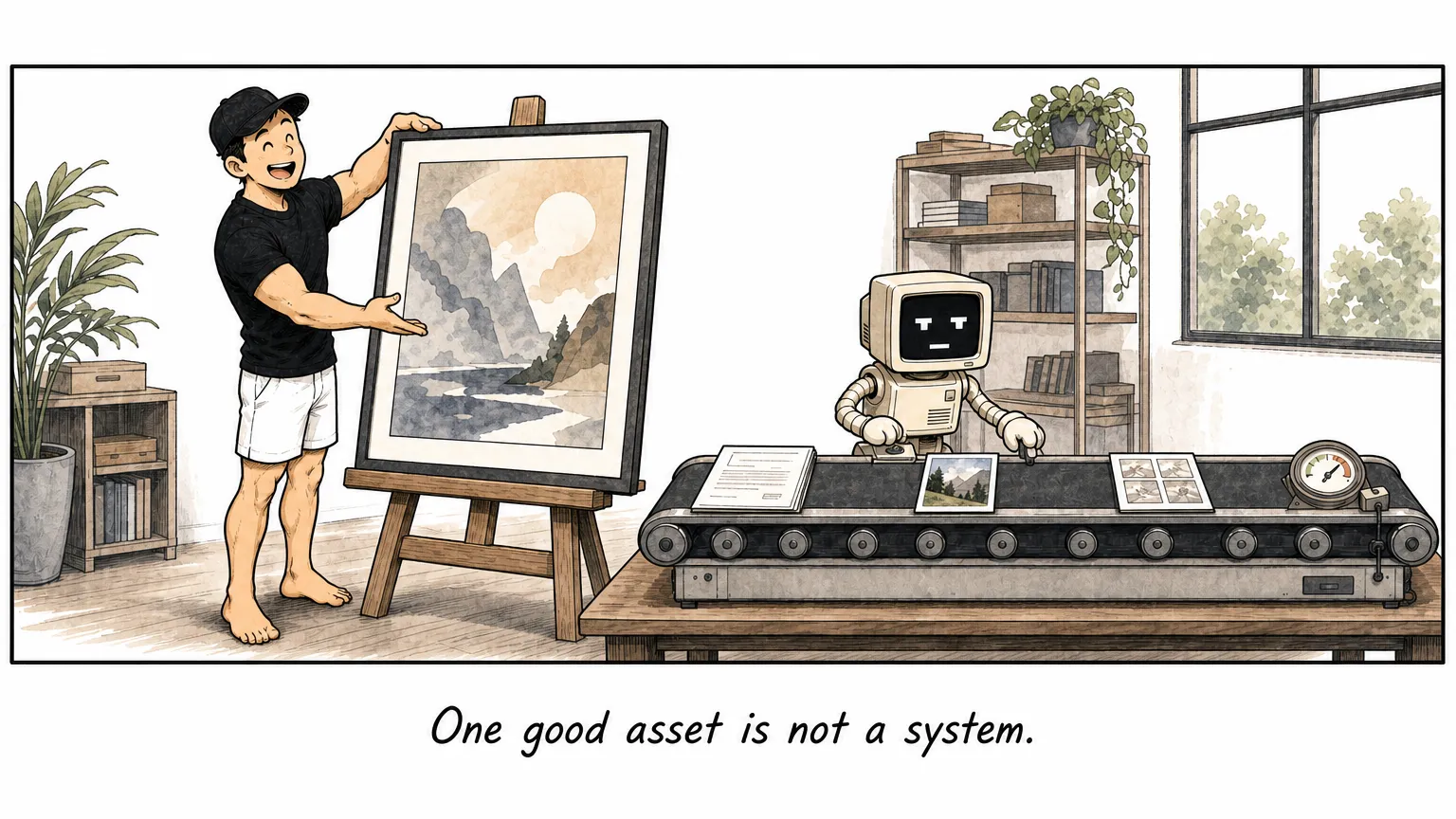
4. Create a campaign system, not one impressive asset
One good-looking image is not a campaign.
Participants should learn how to turn one direction into a connected set of outputs:
- A campaign brief.
- A key visual.
- Several angles.
- Copy variants for different audiences or placements.
- Format and crop variants.
- A landing-page or lead-flow recommendation.
- A record of why each variant exists.
The course should teach judgement alongside generation. Marketers still need to check whether the work is true, on-brand, useful, distinctive and suitable for the channel.
More output is only helpful when the team can explain what each version is testing.
5. Include campaign setup and measurement
AI marketing training often stops at content creation. That leaves the hardest handover unfinished.
A useful course should connect the assets to campaign structure, naming, audience, tracking and a small measurement plan. Participants do not need to publish a live campaign in the classroom, but they should understand how the work moves from draft to approved setup.
The measurement plan should answer:
- What action matters?
- What event or result represents that action?
- Which early signals are useful but not the final outcome?
- When will the team review the campaign?
- Who decides what changes next?
AI can help organise results and draft an explanation. A person remains responsible for budget, claims, targeting, final creative and performance decisions.
6. Teach search visibility for Google and AI answers
Modern marketing training should cover how content is discovered in both traditional search and AI-assisted search.
The durable lesson is not a special file or a new type of markup. Google states that the same foundational SEO practices apply to AI Overviews and AI Mode. Pages still need to be crawlable, indexed, internally linked and useful in text form.
For ChatGPT search, OpenAI says public sites can be surfaced when they do not block OAI-SearchBot. OpenAI also adds utm_source=chatgpt.com to referral links, which creates a measurable traffic source in analytics.
Participants should therefore learn to:
- Choose one clear search job per page.
- Answer the main question directly.
- Use sources for factual claims.
- Name the relevant company, person, service and location clearly.
- Add useful internal links.
- Keep the page accessible to search crawlers.
- Measure search and referral traffic without pretending every AI mention is visible.
No course can guarantee a Google ranking or an AI citation. It can teach the conditions that make a page eligible and useful.
7. Save the process so the team can run it again
The last step is packaging.
Participants should save the instructions, context, templates, checks and tool sequence as a reusable workflow. Then they should run it again on a fresh campaign input.
Key takeaway: The second run is the test. It shows whether the process is reusable or whether the first result depended on the trainer standing beside the participant.
Saving a repeatable campaign workflow is also the move from prompting to systems, the jump described in the 4 stages of AI maturity.
What should a participant leave with?
I would expect a practical AI marketing course to produce:
- One campaign brief.
- One audience insight note.
- One AI brand kit.
- One connected ad or content series.
- One draft campaign setup and measurement plan.
- One reusable campaign workflow.
- One fresh test of that workflow.
- One named next use after the course.
This is a stronger assessment than asking participants to repeat definitions or submit a prompt list.
Questions to ask a training provider
- What complete marketing process will participants run?
- Which campaign outputs will they build?
- Will they use their own brand and campaign context?
- How are research sources checked?
- How are privacy, permissions and confidential files handled?
- Does the course connect creative work to setup and measurement?
- What human approval points remain?
- What workflow does the participant keep?
- How will the participant test it without the trainer?
If the answers focus mainly on the number of tools demonstrated, keep asking. If you are comparing learning formats more broadly, see which type of AI course in Malaysia fits.
See the AI Mastery for Marketing workshop if your team wants to build an end-to-end campaign playbook. For wider company use cases, explore these 15 practical AI workflow examples for business teams.