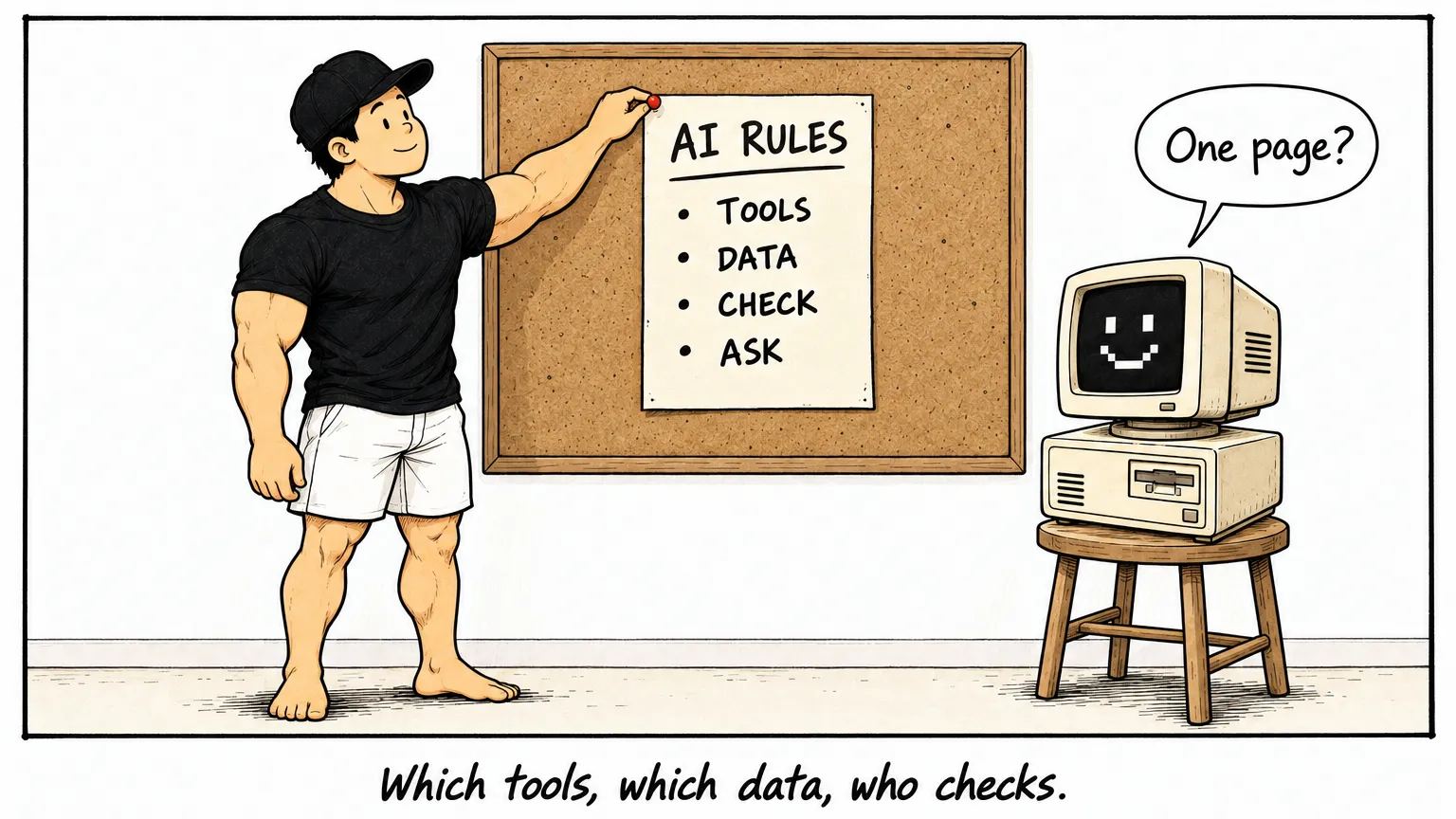
A staff AI policy fits on one page. It answers five questions: which AI tools and accounts staff may use, what data never goes in, who checks AI output before it leaves the company, when staff say AI was used, and who to ask.
This page is for HR, or whoever has been asked to “write an AI policy” before an AI rollout or a training day. Build yours in the builder below, then print it or paste it into your handbook.
Malaysia has no dedicated AI law yet, according to the National AI Office. The national AI governance guidelines are voluntary, and the Personal Data Protection Act applies to personal data processed in commercial transactions, whichever tool does the processing. This page is not legal advice: have your lawyer or data protection officer (DPO) review your policy before you adopt it.
I train teams to use AI on the tools and data their company approves. I do not draft policies or give legal advice. The template holds the rules I ask clients to settle before my classes.
- Clauses in the template
- Nine, one or two lines each
- Malaysia's AI law
- No dedicated AI law yet
- National AI guidelines
- AIGE: voluntary, seven principles
- Personal data in AI tools
- PDPA principles apply
- What you leave with
- A one-page policy to print or paste
How do you write an AI policy for employees on one page?
Write an AI policy for employees by settling nine short rules and naming one owner. Pick an option for each rule below. The policy under the builder updates as you go, and the first option in each rule is the starter template.
Who is the policy for?
Leave a field blank and the policy uses the wording in grey.
Pick each rule
The first option in each rule is the starter template. Change any that do not fit.
Your one-page AI policy
Plain text you can paste into your handbook, print, or download.
Starter template
AI policy for employees
- Who this coversThis policy covers every employee who uses AI tools for work at the company. It covers chat assistants, AI features inside other apps, and AI connected to company accounts.
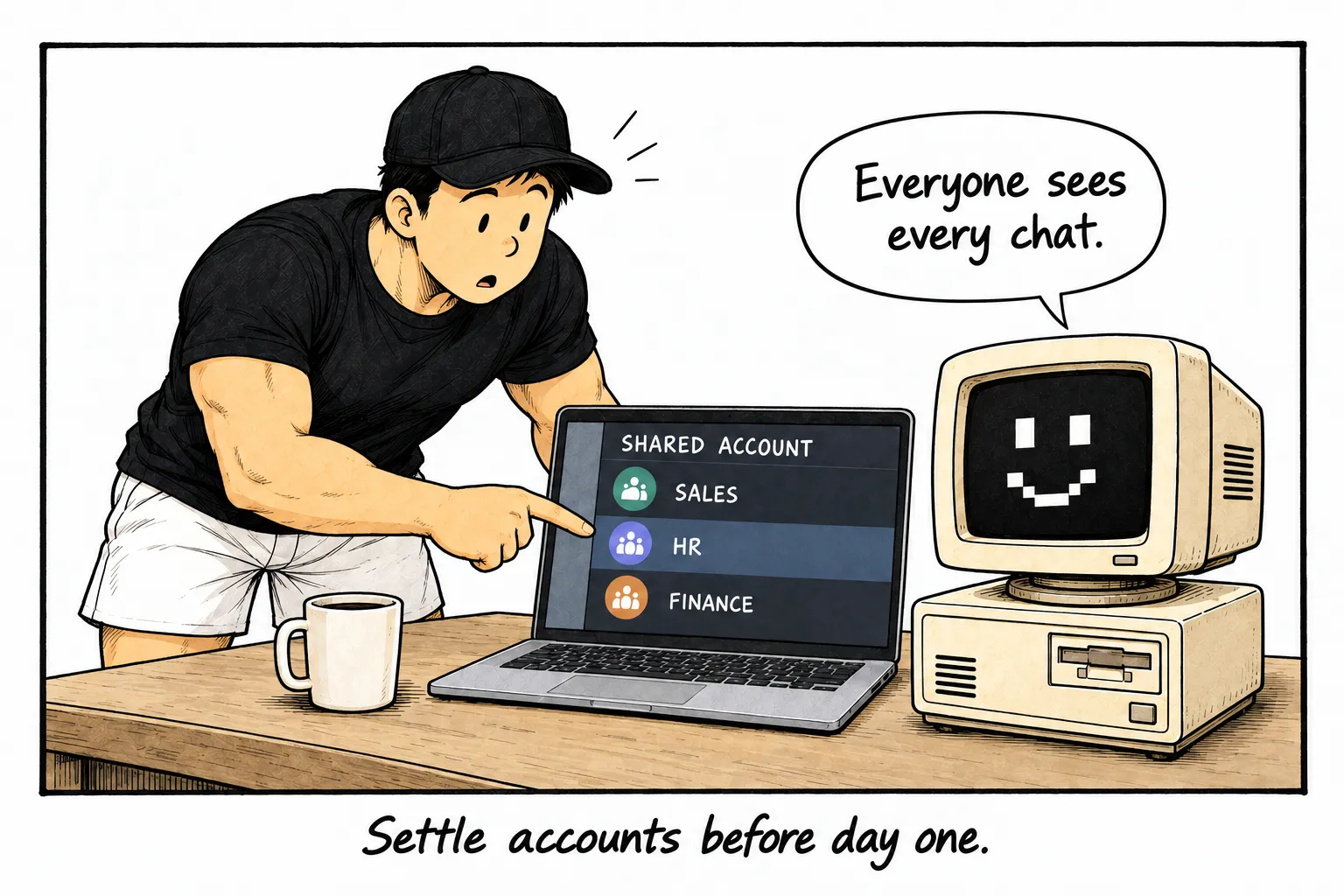
- Approved tools and accountsUse AI for work only on accounts the company pays for and manages. Do not put work data into a personal AI account. Everyone on a shared account can see its chats, files and connected accounts, so share one only within a team that may see each other's work.
- Data rulesNever put personal data about customers, staff or job applicants into an AI tool. Never put in confidential company data, such as pricing, contracts, financials or passwords. Public information and internal work that is not confidential are fine. If you are not sure, ask the HR manager first.
- Human reviewA named person checks AI output before it goes to a customer, a regulator or the public. That person is responsible for it. AI is never the only basis for a decision about a person, such as hiring, pay, performance or discipline.
- Telling people AI was usedTell the reader when AI wrote most of something you send them. If a customer or colleague asks whether AI was used, say so.
- Connectors and automationsAn AI tool may connect to company email, files or systems only read-only, or with a person approving each action. Wider access needs written approval from the HR manager.
- TrainingStaff complete AI training before they get a company AI account. The training uses the approved tools and follows these data rules.
- Mistakes and data slipsIf personal or confidential data goes into an AI tool by mistake, tell the HR manager the same day. Say which tool, when, and what went in. Report it even if you are not sure it matters.
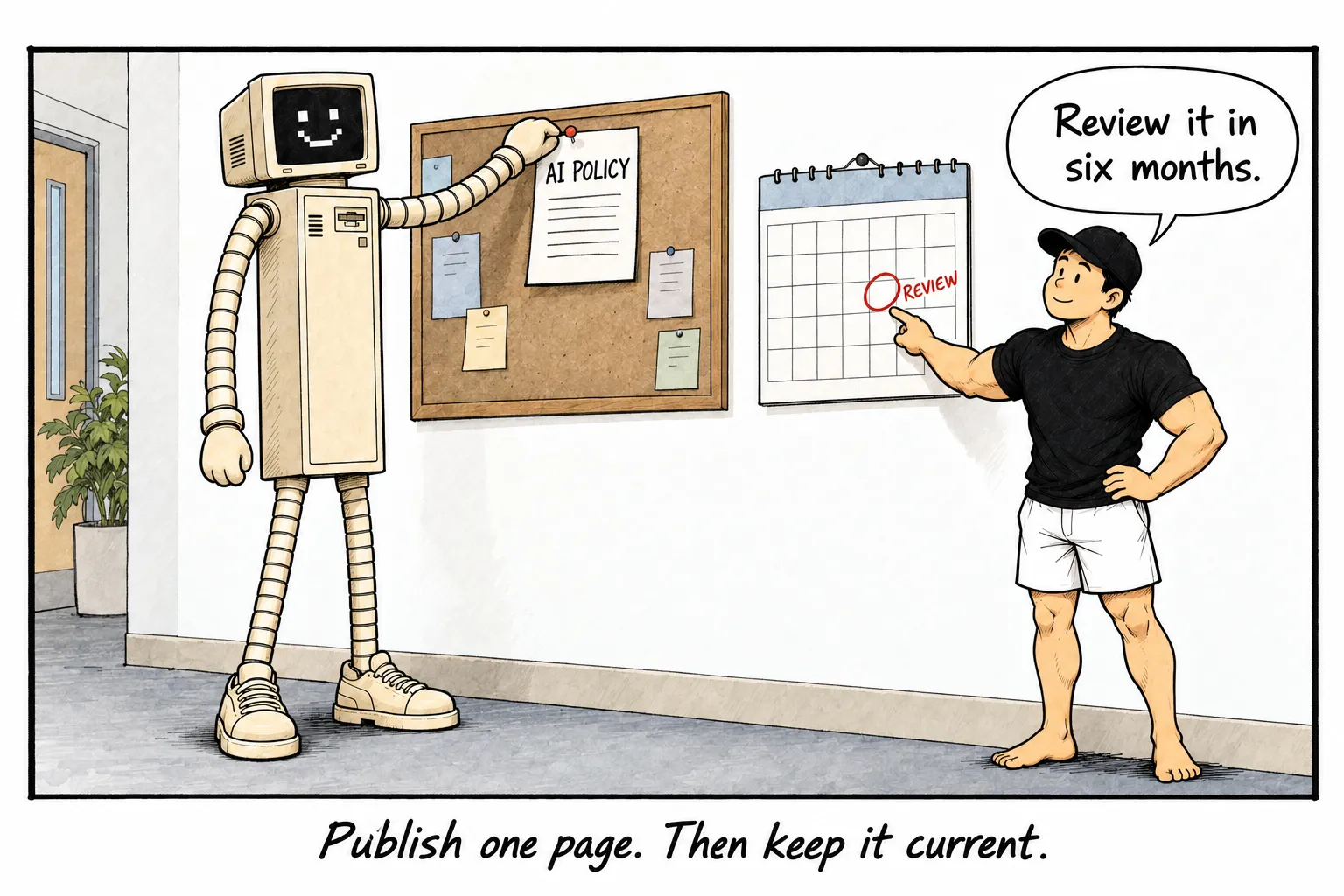
- Owner and reviewThe HR manager owns this policy and answers questions about it. It is reviewed every 6 months, and whenever the company adds a new AI tool.
This template is not legal advice. Have your lawyer or data protection officer review it before you adopt it.
What I would do: Fill it in with someone from IT and one line manager in the same room. Then the tool and data rules match what IT already allows and how the team works day to day.
What is Malaysia’s current policy on AI?
Malaysia has no dedicated AI law yet. The National AI Office (NAIO) says so on its FAQ, and adds that Malaysia is exploring a proposed AI Governance Bill. A staff AI policy (polisi AI in Bahasa Malaysia) sits on top of four published sources.
- 20 Sep 2024AIGE launchedNational AI governance guidelines, MOSTI
- Jan to Jun 2025PDPA amendmentIn force in three phases: 1 Jan, 1 Apr, 1 Jun
- Apr 2026ADMP GuidelineAutomated decisions and profiling
- 10 Jul 2026AI Governance BillPublic consultation opens
The National Guidelines on AI Governance and Ethics (AIGE) were launched on 20 September 2024 by the Ministry of Science, Technology and Innovation (MOSTI). They are voluntary and set seven principles. Part A is written for end users, which means the staff who use AI tools.
The Personal Data Protection Act 2010 (PDPA) applies to anyone who processes personal data in respect of commercial transactions. Its seven principles are General, Notice and Choice, Disclosure, Security, Retention, Data Integrity and Access. The 2024 amendment came into force in three phases in 2025. It renamed “data users” as data controllers, bound data processors to the Security Principle, and added a duty to appoint a DPO and to notify personal data breaches.
The ADMP Guideline from the Personal Data Protection Commissioner covers automated decision-making and profiling (ADMP). It applies only where AI is used to process personal data for those purposes. One of its best practices: AI must not be relied on as the sole factor in decisions about a person.
The proposed AI Governance Bill went to public consultation from 10 July 2026, through the government’s Unified Public Consultation portal. The Ministry of Digital says it is still being refined.
Which of your data falls under the PDPA is a question for your lawyer or DPO. A staff policy can still name the principles it follows and keep personal data out of AI tools unless an approved process covers it.
What should an AI policy for employees include?
An AI policy for employees should include nine clauses: who it covers, approved tools and accounts, data rules, human review, telling people AI was used, connectors, training, mistakes, and an owner with a review date. Switch the view to see which AIGE or PDPA principle each clause serves.
- 1Who it coversAIGEAccountabilityPDPANo single principle. It sets who the other eight rules bind
- 2Approved tools and accountsAIGEPrivacy and SecurityPDPASecurity Principle: practical steps to protect personal data
- 3Data rulesAIGEPrivacy and SecurityPDPAGeneral Principle (no more data than the purpose needs) and Disclosure Principle (no disclosure beyond the collection purpose without consent)
- 4Human reviewAIGEAccountability; Fairness; Reliability, Safety and ControlPDPAADMP Guideline 10.2.6: AI is not the sole factor in decisions about a person
- 5Telling people AI was usedAIGETransparencyPDPANotice and Choice Principle, where AI processes someone's personal data
- 6Connectors and automationsAIGEReliability, Safety and ControlPDPASecurity Principle
- 7Training before accessAIGEPart A of the guidelines, written for end usersPDPAADMP Guideline 10.2.5: train the staff who use AI
- 8Mistakes and data slipsAIGEAccountabilityPDPASecurity Principle; breach notification for data controllers since 1 June 2025
- 9Owner and review dateAIGEAccountabilityPDPAData protection officer, required since 1 June 2025 above the Commissioner's thresholds
1. Who it covers
Name who the rules bind: all staff, plus contractors if they use company accounts or data. Cover the AI features inside your email, document and meeting apps as well as chat assistants.
2. Approved tools and accounts
List the AI tools staff may use for work, and keep work data out of personal accounts. Settle shared accounts here. Everyone on a shared account sees all its chats, files and connected accounts, and the account connects to only one Google or Microsoft account. Check each plan’s data terms before you approve it.
3. Data rules
Say what never goes into an AI tool: personal data about customers, staff or job applicants, unless an approved process covers it, and confidential company data. Say what is fine: public information and internal work that is not confidential. HR data has extra questions, covered in my guide to PDPA rules for AI in HR.
4. Human review
Name who checks AI output before it reaches a customer, a regulator or the public. State that AI is never the only basis for a decision about a person, which matches the ADMP Guideline’s best practice.
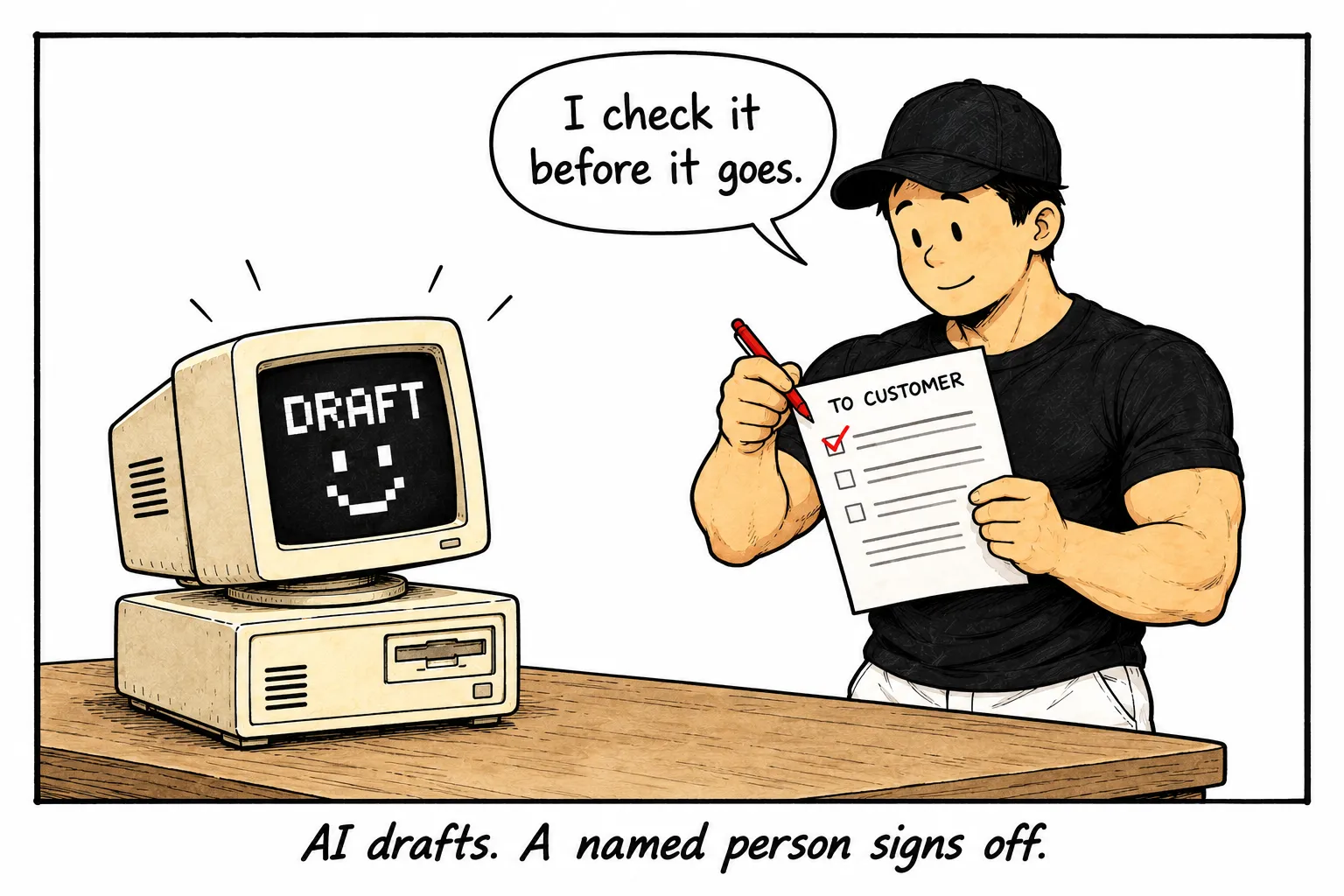
My own company runs this rule on government claims. AI prepares HRD Corp claim material and checks for missing evidence. A person reviews the values, evidence and declarations, and makes the final submission. For hiring, see this human-gated AI workflow in CV screening.
5. Telling people AI was used
Say when staff tell a customer or colleague that AI helped. Pick a line people can apply without asking: when AI wrote most of it, or whenever AI helped.
6. Connectors and automations
Connectors let an AI tool read or act in your email, files or other systems. Start them read-only, or with a person approving each action, and require written approval for wider access. In my classes, connectors start read-only or human-reviewed unless the client approves more.
7. Training before access
Decide whether staff get trained before they get an account, or within a set number of days after. Training is where people practise the data rules on the approved tools. The ADMP Guideline also lists staff training as a best practice.
8. Mistakes and data slips
Tell staff who to contact the same day if personal or confidential data goes into an AI tool by mistake. Since 1 June 2025, PDPA data controllers must notify personal data breaches. Whether a slip counts as one is for your DPO to judge, so they need to hear about it early.
9. Owner and review date
Name one owner who answers questions, and set a review date: every six or 12 months, and whenever you add an AI tool. Since 1 June 2025, data controllers above the Commissioner’s thresholds must appoint a DPO. If you have one, bring them into the review.
What should HR settle before AI training?
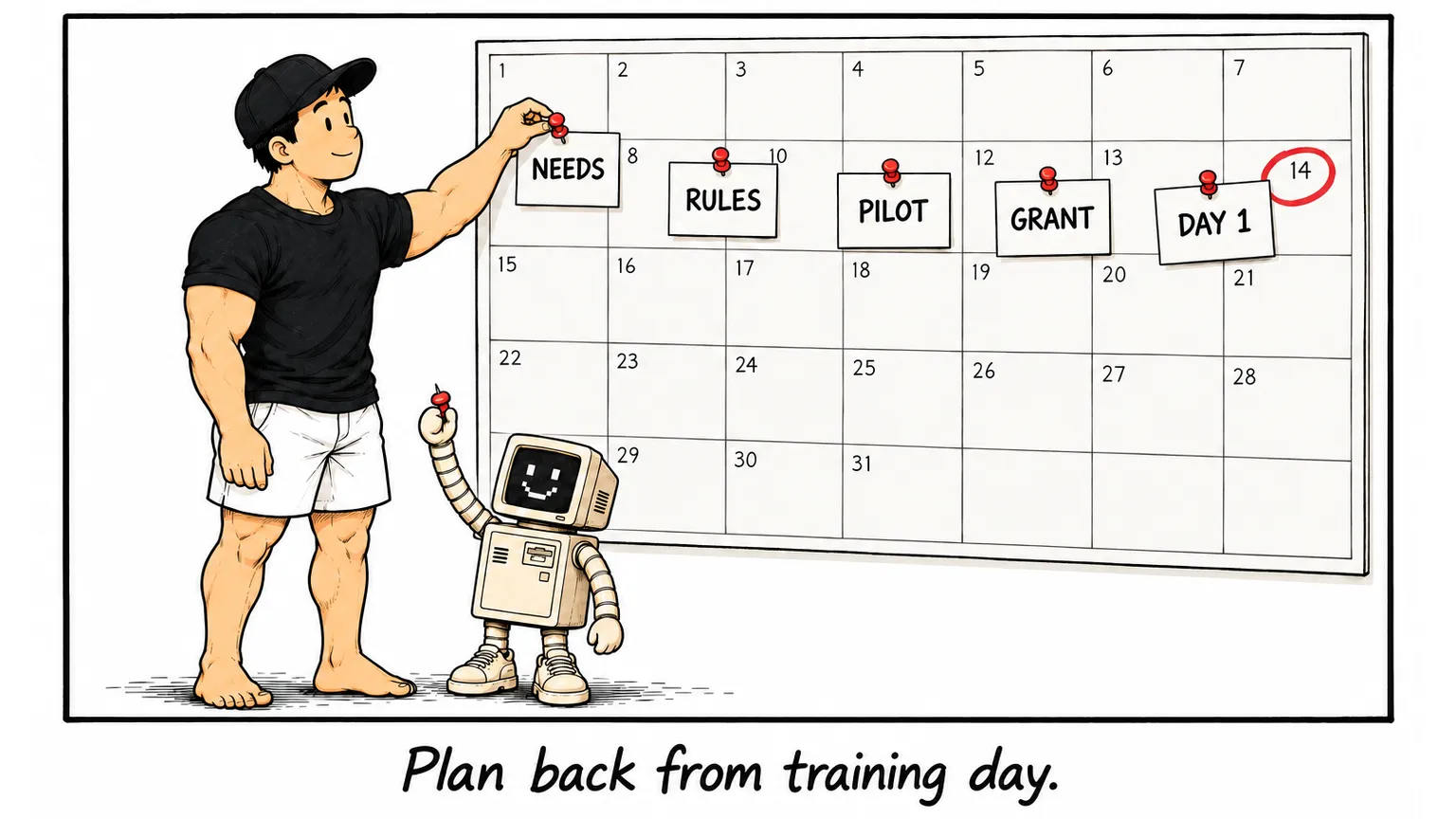
HR should settle accounts, data and review before AI training, because every rule in the policy shows up on the training day. People log in to an account, open a work file, and build something that someone has to check.
The needs analysis for a recent in-house class showed what happens without those rules. Data privacy awareness was the team’s lowest score, 2.0 out of 5. Three people rated themselves “not aware”, including the heaviest AI user. Nobody knew of a written AI policy, and the team was handling customer, pricing and dealer data in free AI tools.
The same company had fixed its budget at two standard ChatGPT seats, one for sales and one for marketing. That decided the tool rule before the day began: each team shared one account, and everyone on it could see its chats.
Here is what I ask clients to settle before my classes. Tick each one as you agree it, and the list keeps your ticks.
My needs-analysis form for corporate classes asks three questions that are policy questions: which AI tools are allowed on your device or network, whether external AI tools are allowed for training, and whether you can bring one non-confidential work example. If HR cannot answer them yet, settle the policy first.
When you compare trainers, ask each one how they will handle your company material. The answer should match your data rules.
How do you roll out an AI policy for employees?
Roll out a staff AI policy in five steps, from listing what people already use to a review date.
- Step 1ListCurrent AI use, and on which accounts
- Step 2AgreeClauses with IT, legal or DPO, a manager
- Step 3PublishOne page, in the handbook
- Step 4TrainBefore or soon after access
- Step 5ReviewIn six months, or when tools change
Start with what people already use. In the class above, the team was already using free AI tools for work before any policy existed. Listing that use first tells you which rules matter most.
The policy is step two of an AI upskilling plan for employees. A training needs analysis for AI skills then shows which tasks to train first, and which wait for a data rule.
Print your policy from the builder and take it to your next meeting with IT.
Questions about AI policies for employees
Should my company have an AI policy?
Yes, if staff use AI for work. One page settles which tools and data are allowed before someone pastes customer data into a free tool.
What is an example of an AI policy?
The starter template above is one. It has nine short clauses, from approved tools to a review date. Copy it, print it on A4, or download it as a .txt file.
Is there an AI law in Malaysia?
Not a dedicated one yet. The National AI Office says Malaysia is exploring a proposed AI Governance Bill. The PDPA still applies to personal data processed in commercial transactions.
What are the principles of AI in Malaysia?
Seven, under the national AIGE guidelines:
- Fairness
- Reliability, safety and control
- Privacy and security
- Inclusiveness
- Transparency
- Accountability
- Pursuit of human benefit and happiness
References
Show all 10 sources
Sources checked 24 Oct 2026. pdp.gov.my was unreachable that day, so its three documents were read from archived copies of the official files. The pre-training checklist, connector rule, claim workflow, needs-analysis form and class details come from JWT & Co's own training records. The client stays unnamed.
- National AI Office: AI governance and policy FAQ. “Malaysia does not currently have a dedicated AI law yet”; exploring a proposed AI Governance Bill; the seven AIGE principles.
- MOSTI: launch of the National Guidelines on AI Governance and Ethics, 20 September 2024.
- MOSTI: National Guidelines on AI Governance and Ethics (PDF). Section 1.3, voluntary; Part A for end users; section 2.7.1, the seven principles.
- Ministry of Digital: engagement on the proposed AI Governance Bill, 10 July 2026. Public consultation through the Unified Public Consultation portal.
- Personal Data Protection Act 2010 (Act 709) (PDF, reprint). Section 2, application; section 5, the seven principles; sections 6 to 9.
- Personal Data Protection (Amendment) Act 2024 (Act A1727) (PDF). Data controllers, processors and the Security Principle, DPO appointment, breach notification.
- P.U. (B) 522: commencement dates of Act A1727 (PDF). 1 January, 1 April and 1 June 2025.
- Personal Data Protection Commissioner: Automated Decision-Making and Profiling Guideline (PDF), 2026. Paragraph 10.2.5, staff training; paragraph 10.2.6, AI not the sole factor.
- Commissioner’s Circular No. 1 of 2025: Appointment of Data Protection Officers (PDF, Malay). Paragraph 4(1), the thresholds for appointing a DPO.
- Unified Public Consultation portal. Where the AI Governance Bill consultation runs.