An AI upskilling plan is five decisions HR makes around one training: which tasks to train, what staff may put into AI, who goes first, how it is paid for, and how you will know it worked.
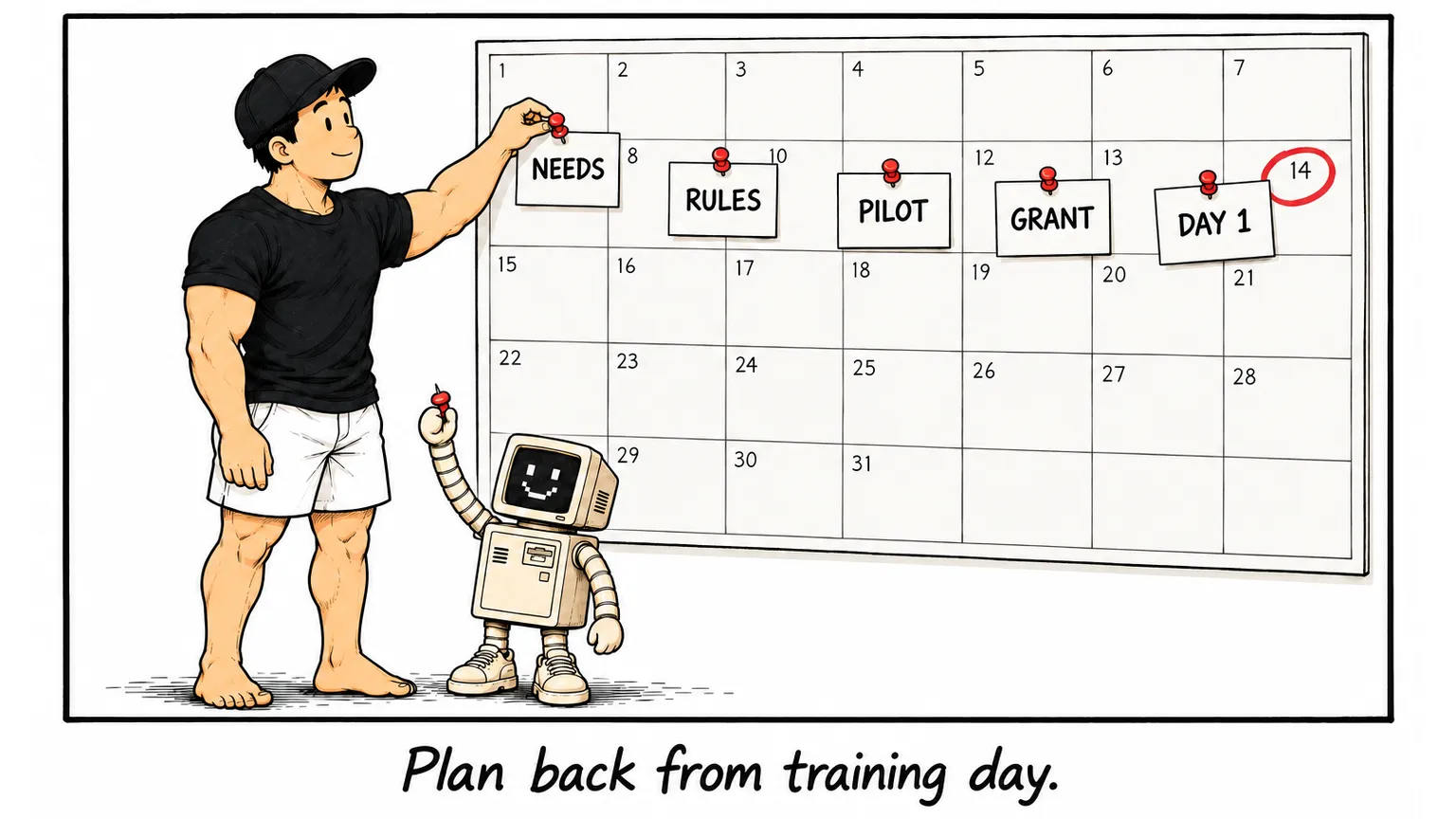
Plan back from the training day. Start the needs analysis about six weeks out. If you will claim from HRD Corp, the grant application goes in at least 14 days before in-house training, and that is the only fixed date in the plan. Re-measure 30 and 90 days after.
This playbook is for the HR or L&D owner who has to take a dated plan to management. I teach AI Mastery for Business in-house across Malaysia, and the dates below are the plan I recommend. If you own a small business and handle training yourself, my guide to AI training for SMEs in Malaysia starts from the owner’s side.
- The five steps
- Needs, rules, first group, funding, re-measure
- When to start
- About 6 weeks before training
- The one fixed date
- HRD Corp grant application at least 14 days before in-house training
- When to check
- 30 and 90 days after training
Your AI upskilling plan, step by step
Your AI upskilling plan runs on one date: the first day of training. Pick it below and every step gets its calendar date, with today marked on the line.
Your training date and group
Pick the first training day. Every step counts back from it.
Set to about four weeks from today. Change it to your date.
8 people need 8 needs forms, 8 laptops cleared by IT and 8 paid AI accounts, from USD 20 a month each.Shared accounts save seats, but everyone on one sees all its chats and files.
Your plan
Only the red line is HRD Corp's rule. Every other date is my recommended plan.
- 6 weeks beforeFind the training needsSend each person a short needs form. Managers confirm the task each one brings.Step 1 in detail ↓
- 5 to 4 weeks beforeSettle the AI rulesAgree which accounts staff use and what stays out of AI. Ask IT to clear app installs now.Step 2 in detail ↓
- 4 weeks beforeLock the group, trainer and budgetConfirm the names, the trainer, the date, the venue and how it is paid for.Step 3 in detail ↓
- 3 weeks beforeSubmit the HRD Corp grant applicationMy recommended date. It leaves a week to answer HRD Corp's one query, due within 5 calendar days.Step 4 in detail ↓
- 14 days beforeHRD Corp's minimumThe last day to submit an in-house grant application for this training date.HRD Corp rule
- TrainingTwo days of trainingEach person turns one task into a tested workflow and names when it will first run at work.
- 1 week afterFirst runs at workCheck each workflow ran on that week's work. Fix what broke.
- 30 days afterFirst re-measureCompare time per task with what each person wrote down before training.Step 5 in detail ↓
- 90 days afterSecond re-measureCount the workflows still running, then pick the next group.
Have a date on the plan? AI Mastery for Business is the two days in the middle of it: in person at your office, built on the tasks your needs analysis finds.
Why upskill staff on AI now?
Upskill staff on AI now because they may already be using it on their own accounts, with no company rules. A plan turns that scattered use into tasks the company can repeat and check.
The needs analysis for a recent in-house class showed exactly that. All 7 people said they already used AI, mostly free ChatGPT and Gemini. Data privacy awareness was their lowest score, 2.0 out of 5, and the company had no AI policy.
AI literacy is the baseline: knowing what an AI tool can do with your files, where it goes wrong, and what must stay out of it. An upskilling and reskilling plan for AI should build that, then go one step further, to one task each person can hand to AI every week.
One weekly report, before and after training
- Explain the business again
- Paste in this week's files
- Rewrite the instructions from memory
- ToolsThe AI app, on your own laptop
- ContextCompany files and rules, saved once
- SkillsThe steps, saved and tested
- Next weekRuns again on next week's files
In my classes, each person brings one task they repeat, such as a weekly report. They bring the files from one recent week and the finished result, so we can compare the AI’s output against their own.
On day one they save the company’s background into context files and turn the task into a saved skill: a set of instructions the AI reuses. On day two they run it on fresh files, fix what breaks, and name when it will first run at work, who owns it and the next run date.
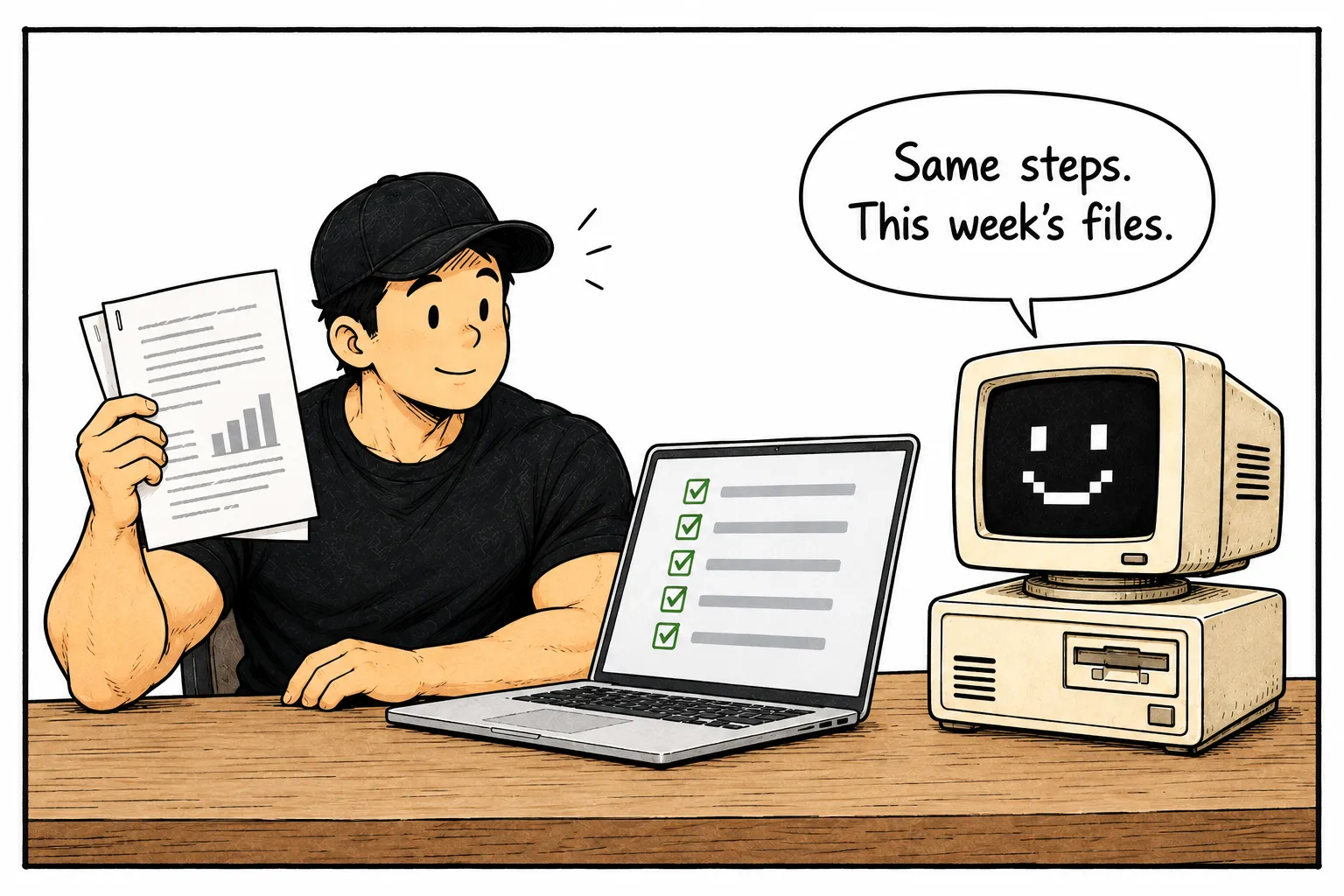
The rule I teach on day two is “outsource the work, never the thinking”. A person still decides what good looks like.
The five steps in detail
Each step below matches a date on the plan above. The map shows where each one goes deeper.
- 1Find the training needsTraining needs analysis template
- 2Set the AI rulesDecided by HR, with IT and legal advice
- 3Choose who goes firstChoosing an AI trainer
- 4Fund itAI training cost and HRD Corp claims
- 5Measure itMeasuring AI training ROI
1. Find the training needs
A training needs analysis for AI asks three things of each person: which repeated tasks take the most time, what they can do with AI today, and which data they are allowed to use. Send it about six weeks before training, so managers have time to confirm each person’s task.
My training needs analysis template for AI skills turns the answers into a ranked list of tasks to train.
The answers can change the class itself. For that recent in-house class, the needs analysis came back from 7 completed forms, so the class was set at 7. The outline I had been sent assumed 11 to 15.
Ask each person to write down how often they do their task and how many hours it takes. That is your baseline for step 5.
2. Set the AI rules before training
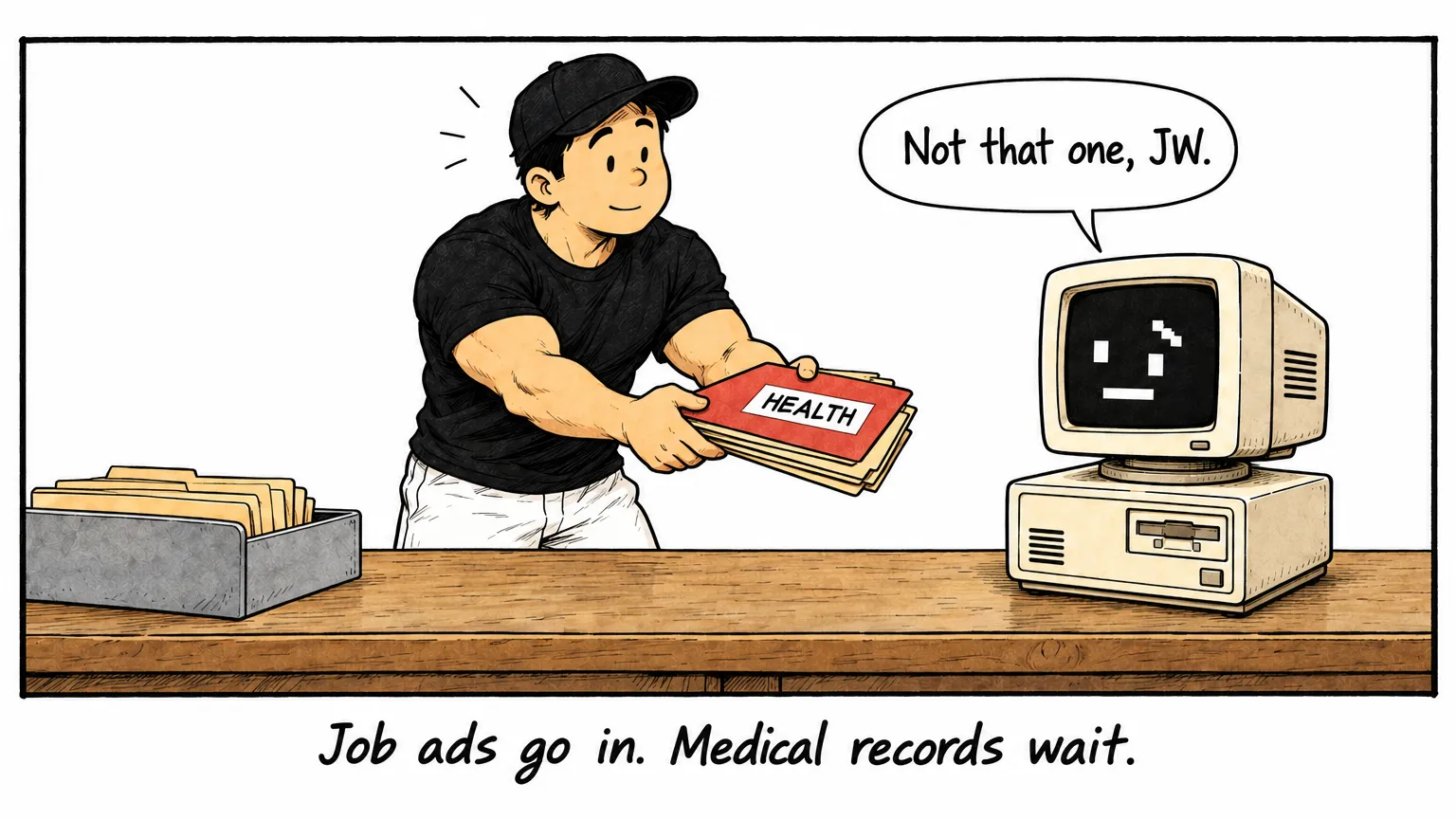
Settle what staff may put into AI before training day, because in a hands-on class people work on company files from the first morning. These are HR’s decisions, made with IT, and with legal advice wherever personal data is involved.
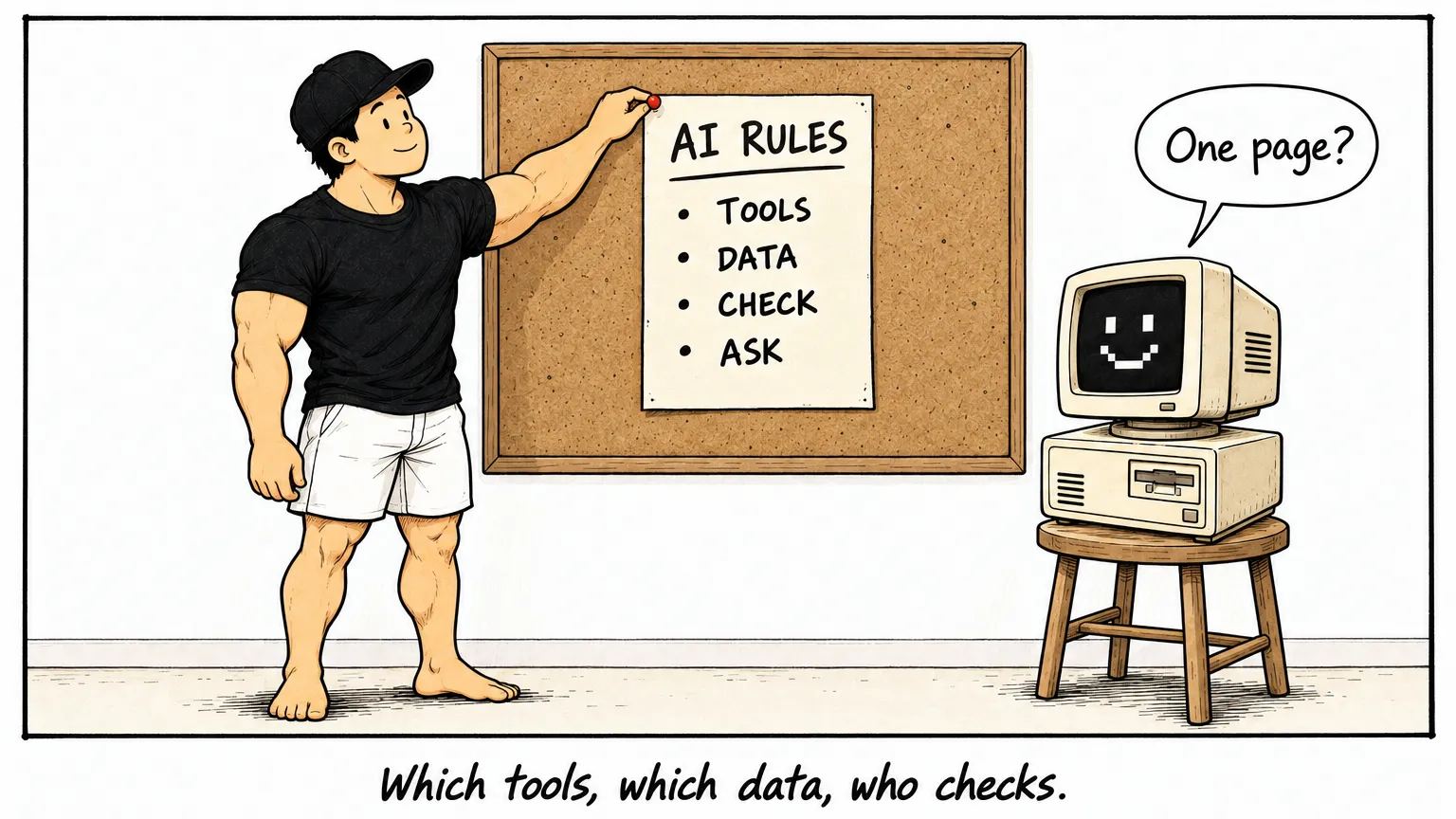
The rules need to answer four questions:
- Which accounts may staff use for company work?
- What stays out of AI tools, such as staff records, customer personal data, prices and anything under NDA?
- If people share an account, who sees what? Everyone on a shared account sees all its chats, files and connected accounts.
- Which tools may connect AI to email, drives or chat? In my classes these start read-only, or with a person approving each action, unless the client approves wider access.
For that same class, the budget was fixed at two ChatGPT seats, so the team shared two accounts. The draft rules named those two as the only approved accounts and kept company information out of personal and free ones.
Ask IT to approve app installs on company laptops at the same time. It can take a few days.
3. Choose who goes first, and the format
Start with one pilot group whose tasks repeat every week, trained in-house on your own accounts and approved files. A public class mixes people from several companies, so it suits one or two people testing the idea first.
My comparison of AI course types in Malaysia sets public and company training beside academic programmes and vendor certifications. Before you book anyone, run through the questions to ask when choosing an AI trainer.
4. Fund it
In-house AI training can be paid from your HRD Corp levy when the course is registered with HRD Corp, the grant application goes in at least 14 calendar days before training starts, and HRD Corp approves it. Training must then start within 90 calendar days after that 14-day period.
HRD Corp issues only one query per application. If the query is not answered within 5 calendar days, the application is rejected. That is why I plan on submitting about 21 days ahead.
My course is registered under HRD Corp Claimable Courses, and I am an HRD Corp accredited trainer. To see what is left to pay after the levy, use my guide to what AI training costs in Malaysia after the HRD Corp levy. The documents and dates are in my guide to claiming HRD Corp for AI training.
Paying directly? Switch the plan above to company-paid. The grant steps drop out, and the budget is agreed at the four-week mark.
5. Measure it at 30 and 90 days
Measure an AI upskilling plan by the workflows still running 30 and 90 days after training, and the time they save against the baseline from step 1.
Before they leave my class, every person names when their workflow will first run at work, who owns it and the next run date. At 30 days, check those runs happened. At 90 days, count what is still running and pick the next group. My guide to measuring AI training ROI sets out a 30-day scorecard and how to estimate the time saved without overclaiming.
Who should go first?
The first group should be people who repeat the same task every week, with a manager who will protect time for it after training.
A first group that works
- Who
- People with a weekly report, quote or reply they repeat
- How many
- Everyone who completes the needs form
- Workflows
- One per person, or one per pair who share a task
- Accounts
- One paid AI account each, from USD 20 a month
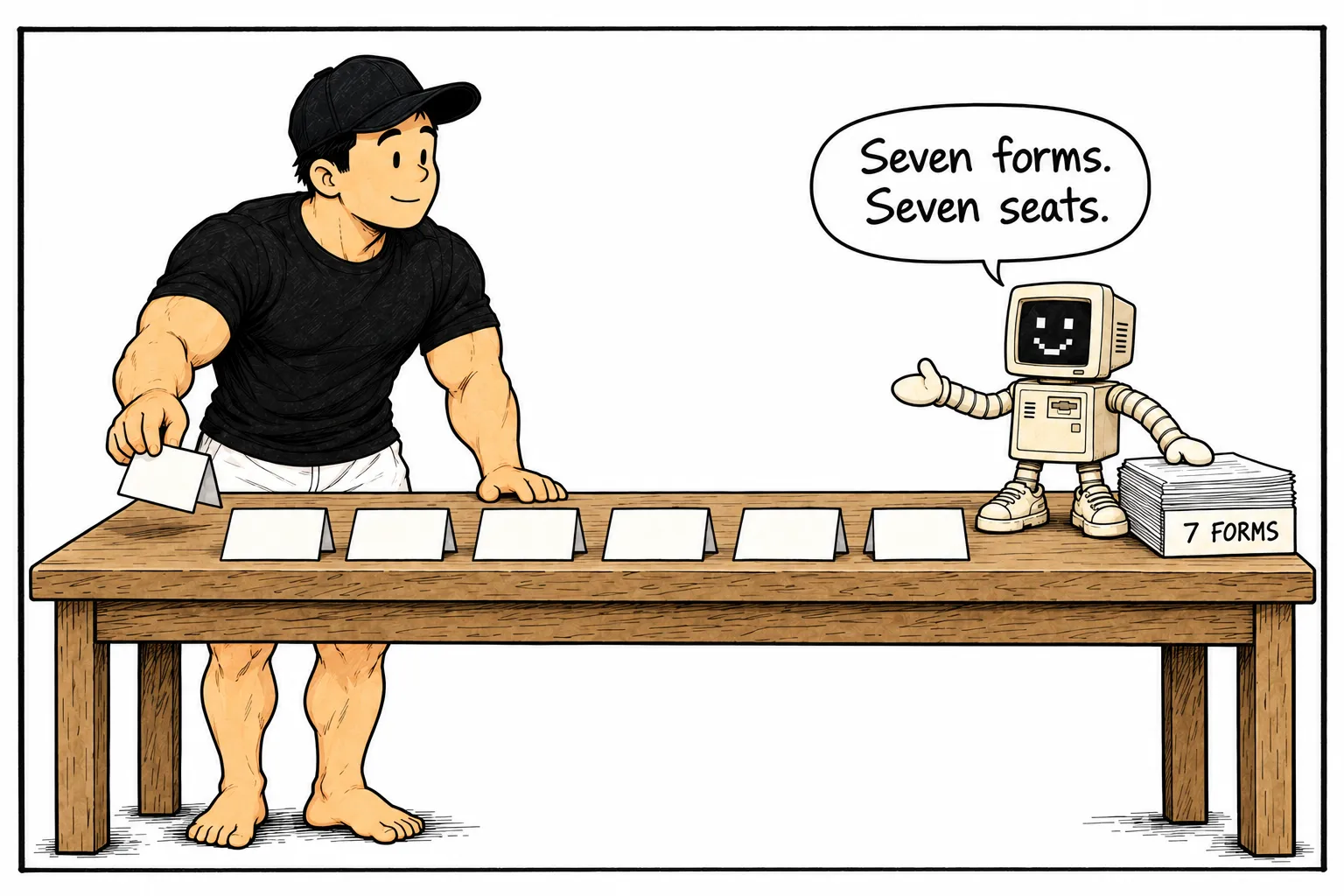
What I would do: Pair two people who do the same task. They build one workflow together, and each can fix it when the other is on leave.
If the budget covers fewer accounts than people, sharing works to start. Settle the shared-account rule from step 2 first.
What does HR own, and what do managers, IT and the trainer own?
HR owns the plan, managers pick the tasks, and the trainer builds the two days on them. IT and finance each sign off one thing before training day.
- HR or L&D
- The dates, the rules sign-off, the grant application and the 30 and 90-day checks
- Managers
- Confirm each person's task, then protect time to use the workflow
- IT
- Approve app installs and the accounts staff will use
- Trainer
- Build the training on the tasks from the needs analysis
- Finance
- Confirm the levy balance or the budget
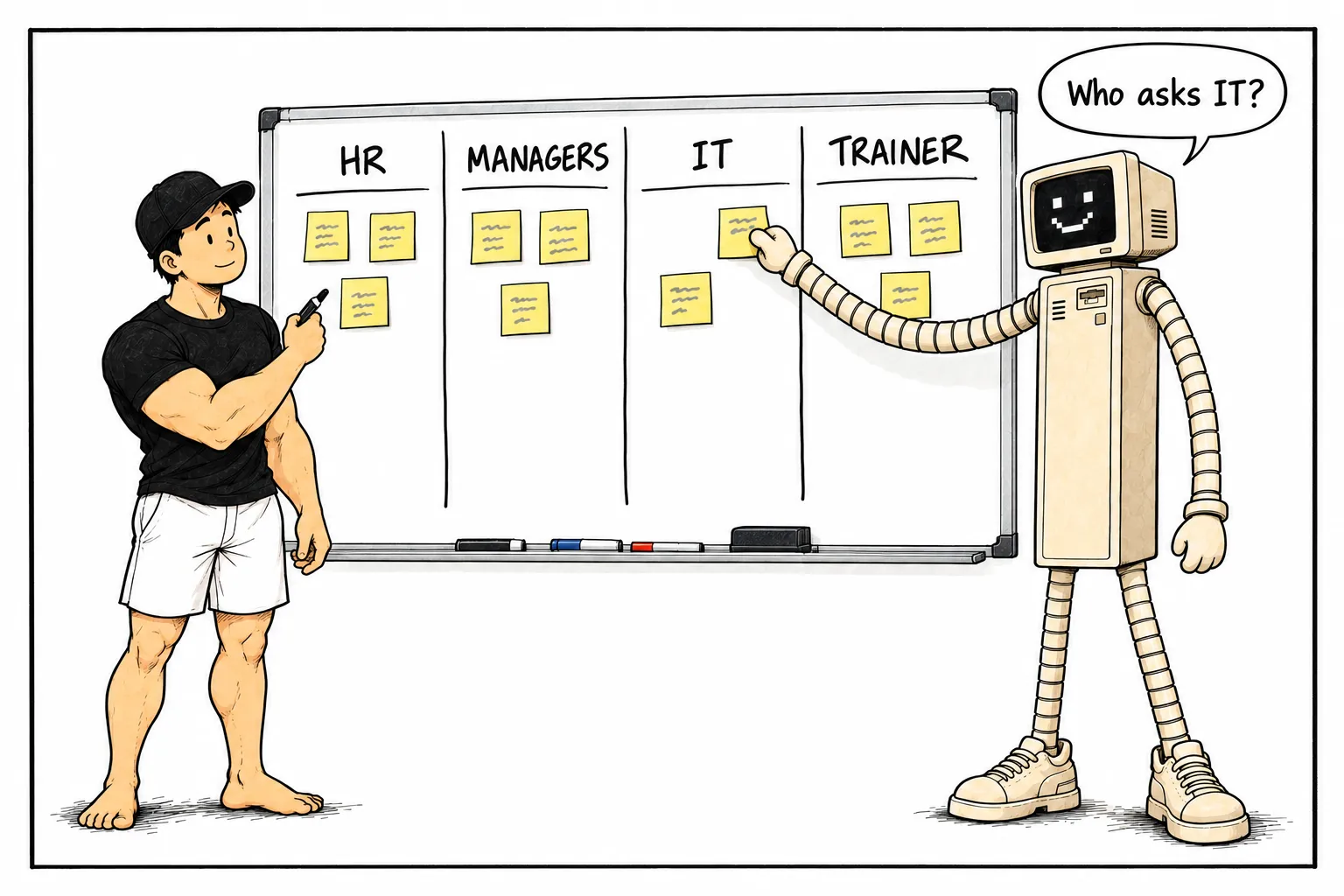
Tick these off as you go. Your ticks stay in this browser.
Can HR start with its own work?
Yes. HR can rebuild one of its own repeated processes first, such as screening CVs, and use it to show the rest of the company what a saved workflow looks like.
One HR process, rebuilt
- Process
- Screening CVs for one job ad
- The AI's part
- Scores each CV against a role profile you write
- People's part
- Confirm the shortlist and send every message
- Rules first
- CVs hold personal data, so settle step 2 before you start
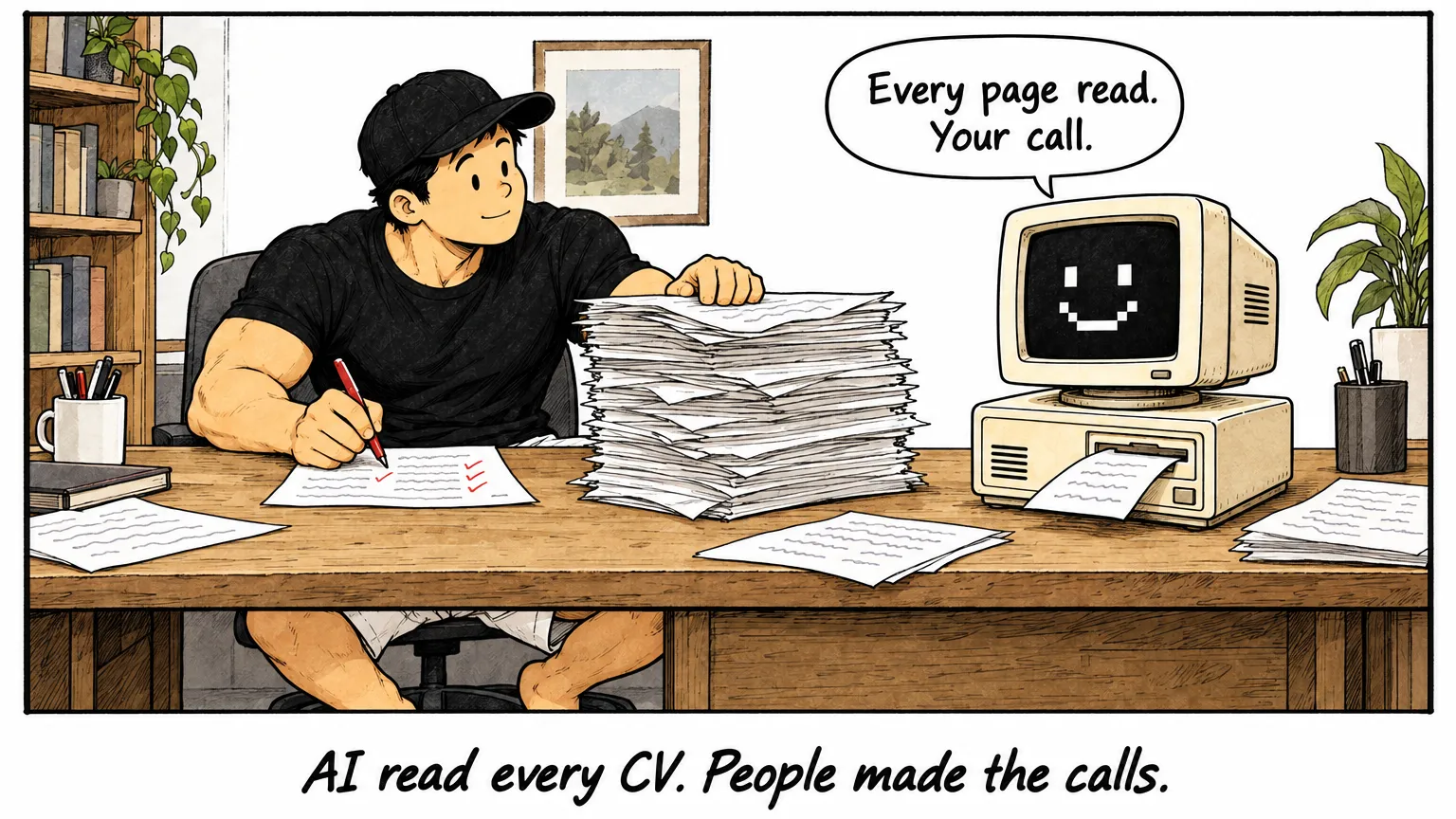
That is how one client’s hiring round ran: the AI scored every CV, and a person confirmed the shortlist before anyone was contacted.
Questions HR asks about AI upskilling
What is the difference between upskilling and reskilling?
Upskilling adds skills for the job a person already does. Reskilling prepares them for a different job. Most AI training is upskilling: the same role, with some tasks handed to AI.
How long does an AI upskilling plan take?
About four and a half months on my recommended plan. That is six weeks of preparation, two days of training and a check 90 days after.
Can we use the HRD Corp levy for AI training?
Yes, for a registered course, once HRD Corp approves a grant application made at least 14 days before in-house training. Companies with 10 or more Malaysian employees must register with HRD Corp and pay a levy of 1% of monthly wages.
Which staff should be trained on AI first?
Staff who repeat the same task every week, with a manager who will protect time for it. Size the group from the needs forms that come back.
References
Show all 3 sources
All sources checked 24 Oct 2026.
- HRD Corp: Claimable Courses grant application helper (PDF), v2026, page 2. In-house grant applications at least 14 calendar days before training starts, and training within 90 calendar days after that period.
- HRD Corp: Grant query helper (PDF). One query per application, answered within 5 calendar days, or the application is rejected.
- HRD Corp: Registered employers. Registration is compulsory for employers with 10 or more Malaysian employees, with a levy of 1% of monthly wages.