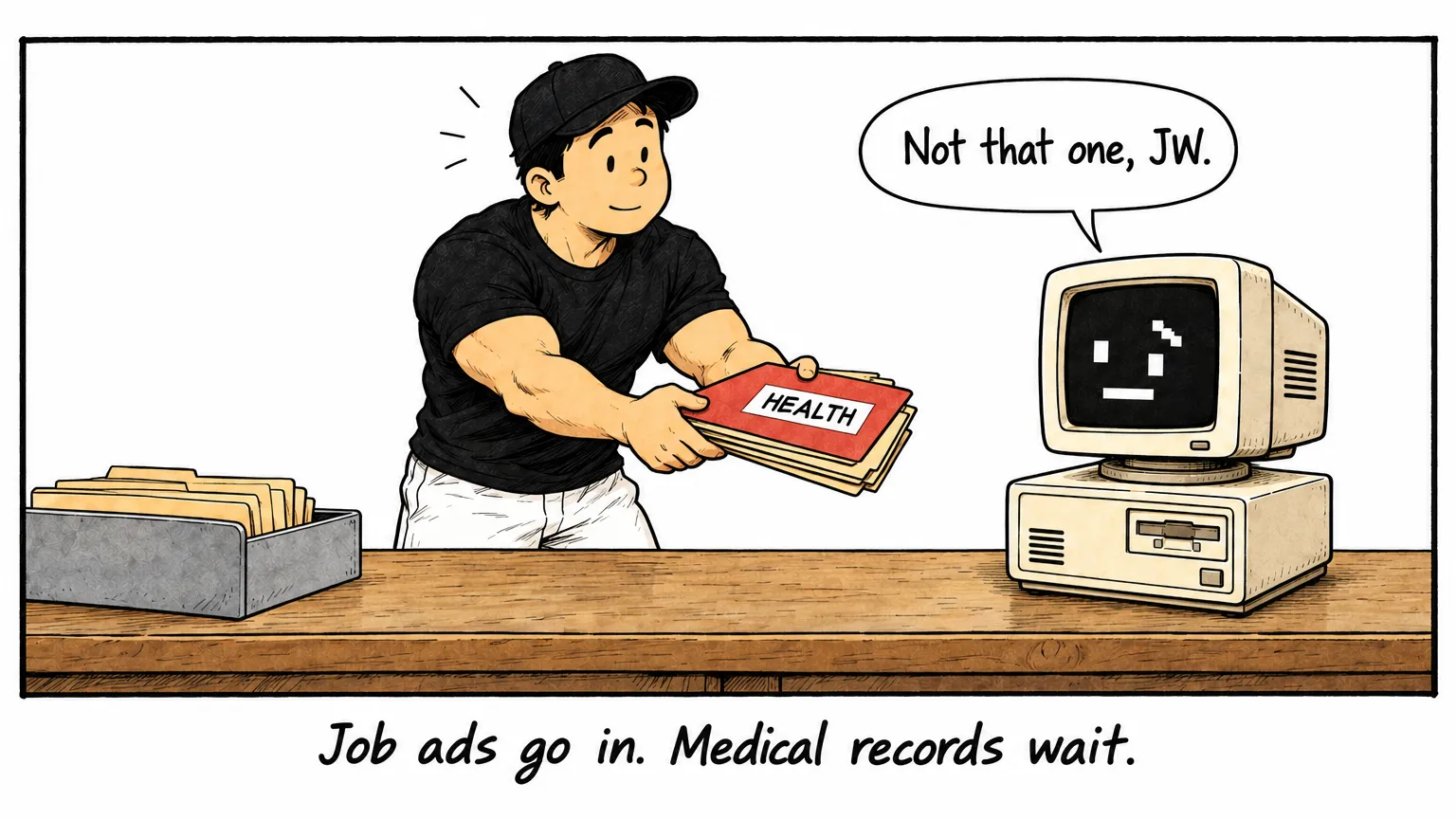
HR in Malaysia can put job ads, HR policies and anonymised figures into an AI account the company controls. Applicant CVs and staff records go in only after the notice, the account and a human reviewer are settled. Health, offence and biometric data stay out unless your data protection officer (DPO) approves a specific process.
Malaysia has no dedicated AI law yet. The Personal Data Protection Act 2010 (PDPA) governs personal data in commercial transactions. On 30 April 2026 the Personal Data Protection Department posted a guideline on automated decision-making and profiling, and its HR example is an algorithm that ranks and shortlists job candidates.
This is a guide to the questions HR settles with its DPO or lawyer, not legal advice. I train teams to use AI at work. I don’t sell legal or PDPA compliance services.
- AI law in Malaysia
- None yetAn AI Governance Bill is under consultation
- Law on personal data
- PDPA 2010, amended in 2024Personal data in commercial transactions
- AI guideline that names HR
- ADMP Guideline, 30 April 2026Its example ranks and shortlists candidates
- Your HR data
- Fine, settle first, or keep outCheck yours in the tool below
Which HR data can go into ChatGPT or Claude?
It depends on whether the data identifies a person, and whether it is sensitive. Tick the kinds of HR data you have in mind.
HR data checker
Tick each kind of HR data you want to put into an AI tool.
Pick the data you have in mind. Every answer is listed below either way.
Fine on a company account
No personal data
The PDPA covers personal data: information about a person who can be identified from it. Use an account the company controls anyway, because the work may still be confidential.
- Job ad or job descriptionNo personal data once the contact name and number are out.
- HR policy or handbookCompany rules, not records about a person.
- Anonymised or aggregate figuresOnly if no one can be picked out. An average salary for a team of two is not anonymous.
Rests on: Act 709 s.2 and s.4. A guide, not legal advice.
Settle first
Personal data
These records identify people. Settle four checks before any of it goes in.
- Notice: your written notice covers this purpose (s.7(1)(b)). Ask your DPO how it should describe the AI provider.
- Account: the company controls the account, and the provider is bound to protect the data as a processor (s.9(2), s.5(1A) since 1 April 2025).
- Border: you have a basis for the transfer if the service processes data outside Malaysia (s.129 as amended).
- Review: if AI ranks, scores or predicts about a person, the DPO runs an impact assessment first and the notice says so (ADMP paras 6.1, 9.3). The guideline recommends a person in the decision (para 10.2.6).
- Applicant CVsNames, contacts and work history. If AI ranks them, the guideline's HR example applies.
- Interview notesAn opinion about a person is personal data too (s.4).
- Performance reviewsPredicting performance at work is profiling under the guideline (para 4.2).
- Payroll and bank detailsIdentifies the person and carries financial details.
- IC numbers and contact detailsIdentifies the person directly. Strip them when the task does not need them.
Rests on: Act 709 ss.7, 8, 9 and 129, Act A1727, and the ADMP Guideline. A guide, not legal advice.
Keep out
Sensitive personal data
Processing it needs explicit consent or a ground the Act lists, such as a right or obligation under law in connection with employment. Keep it out of AI tools unless your DPO approves a specific process.
- Medical certificates and health informationPhysical or mental health is sensitive personal data (s.4).
- Disciplinary records that mention an offenceAn offence or alleged offence is sensitive personal data (s.4). Other disciplinary notes still need the four checks.
- Fingerprint or face attendance dataBiometric data became sensitive personal data on 1 April 2025 (Act A1727 s.3).
Rests on: Act 709 s.4 and s.40(1), and Act A1727 s.3. A guide, not legal advice.
A guide to the questions to settle with your DPO or lawyer, not legal advice. Picks stay saved in this browser.
Personal data goes into an AI tool only after the notice, the account and a human reviewer are settled. Sensitive data stays out.
The habit carries over from other departments. When I planned workflows for one company’s in-house class in October 2026, two rules went into the plan: strip customer addresses from shipping records, because they are personal data, and use downloaded bank statements with the details removed.
Is there an AI law in Malaysia?
Not yet. The National AI Office says Malaysia “does not currently have a dedicated AI law yet”, and lists the PDPA among the laws that apply. The government has proposed an AI Governance Bill. The Ministry of Digital began engagement sessions in July 2026 and said a public consultation was expected to open on 10 July 2026.
MOSTI’s National Guidelines on AI Governance and Ethics (AIGE), launched on 20 September 2024, set seven principles and are voluntary. For personal data, the rules come from the PDPA, its 2024 amendment and the guidelines the Commissioner issues under it.
- 20 Sep 2024AIGE guidelinesMOSTI, voluntary
- Jan to Jun 2025PDPA amendmentsIn force in three phases
- 25 Feb 2025Breach guidelineWhen and how to notify
- 29 Apr 2025Transfer guidelineSending data abroad
- 30 Apr 2026ADMP GuidelineAutomated decisions and profiling
- Jul 2026AI Governance BillEngagement and consultation
What does the PDPA ask when HR uses AI?
The PDPA sets seven principles for processing personal data (s.5(1)). None mentions AI, and none exempts it. Here is the question each one raises when staff put HR data into an AI tool.
The seven principles, as HR questions
- General
- Is there consent, or a reason the Act lists, for using this data this way?s.6
- Notice and Choice
- Does the written notice cover this purpose and the AI provider?s.7
- Disclosure
- Is sharing with the provider within the purpose you notified?s.8
- Security
- Does the company control the account, and is the provider bound to protect the data?s.9, and s.5(1A) for processors
- Retention
- Are chats and uploaded files deleted once the purpose ends?s.10
- Data Integrity
- Does a person check AI output about someone before it goes on file?s.11
- Access
- Can you find what the AI tool holds about a person if they ask?s.12
Three of them need more detail for AI work: notice, disclosure and security.
Notice
The written notice must state the purposes and the class of third parties the data may go to, among other things (s.7(1)(b) and (e)). It must be in Malay and English (s.7(3)). If your applicant or staff notice does not cover AI use or the provider, take it to your DPO before the tool goes live.
Disclosure
Without the person’s consent, personal data may be disclosed only for the purpose it was collected for or a directly related one, and only to the classes of third parties named in the notice (s.8).
An AI provider that processes the data only on the company’s behalf, and not for its own purposes, is a data processor. The Act does not count a processor as a third party (s.4), so the question for the provider is whether the purpose is covered.
Security
The company must take practical steps to protect the data, and get a processor’s guarantees on security (s.9). Since 1 April 2025, processors must comply with the Security Principle directly (s.5(1A)). Breaching a principle now carries a fine of up to RM1 million, up to three years in jail, or both (s.5(2) as amended).
Shared logins are the first problem here. When a team shares one AI account, everyone on it sees every chat, every file and every connected account. HR work needs individual accounts the company controls.
The amendment also renamed the “data user” as the “data controller” (Act A1727 s.2). Older notices and policies may still use the old term.
When does AI use become automated decision-making?
When AI ranks, scores or predicts something about a person and that output drives the decision. The ADMP Guideline uses HR’s own case to show it. Its example is an HR algorithm that ranks and shortlists candidates for interview (para 4.2). Deciding who gets an interview is automated decision-making. Assessing each candidate’s suitability and “potential performance at work” is profiling.
The definitions are wide. Automated decision-making is a decision made without human involvement, by wholly or partly automated means, and it covers cases where “a human merely inputs the data” (para 4.1). A person who only pastes CVs into a chat does not make the decision a human one. Profiling is automated processing that evaluates or predicts a person’s characteristics, including performance at work (para 4.2).
The guideline applies only where AI is used to process personal data involving automated decisions or profiling (para 10.1). So drafting a job ad with AI falls outside it, and ranking applicants with AI falls inside it.
Does the AI rank, score, shortlist or predict something about a person?
No
Ordinary personal data rules
If personal data goes in, the four checks in the data checker still apply.
Yes
The ADMP Guideline applies
- Impact assessment firstThe DPO makes sure a data protection impact assessment (DPIA) is done before processing starts (paras 1.3, 6.1).
- DPO judges the thresholdCould the outcome have legal effects or significantly affect the person? Denying an employment opportunity is one example (paras 7.1, 7.4.3).
- Notice says soThe written notice tells people automated decisions or profiling are used (para 9.3).
- A person in the decisionThe guideline recommends AI is never the sole factor, with trained staff as reviewers (paras 10.2.6, 10.2.7).
The guideline says the DPO shall ensure a DPIA. Paras 10.2.x are best practices a data controller may adopt.
The guideline also sets when automated decisions and profiling may be made: for entering into or performing a contract, for compliance with law, or with the person’s prior consent (para 9.9). Its illustration for hiring notes that automatic rejection may contribute to long-term unemployment.
The guideline recommends one more thing that touches training. Data controllers may give relevant personnel training so they understand how AI operates and where its limits are (para 10.2.5).
Can HR screen CVs with ChatGPT or Claude?
The ADMP Guideline does not ban it. It sets conditions: a DPIA, a notice that says AI is used to rank applicants, a basis for the processing, and, as best practice, a person who reviews the result.
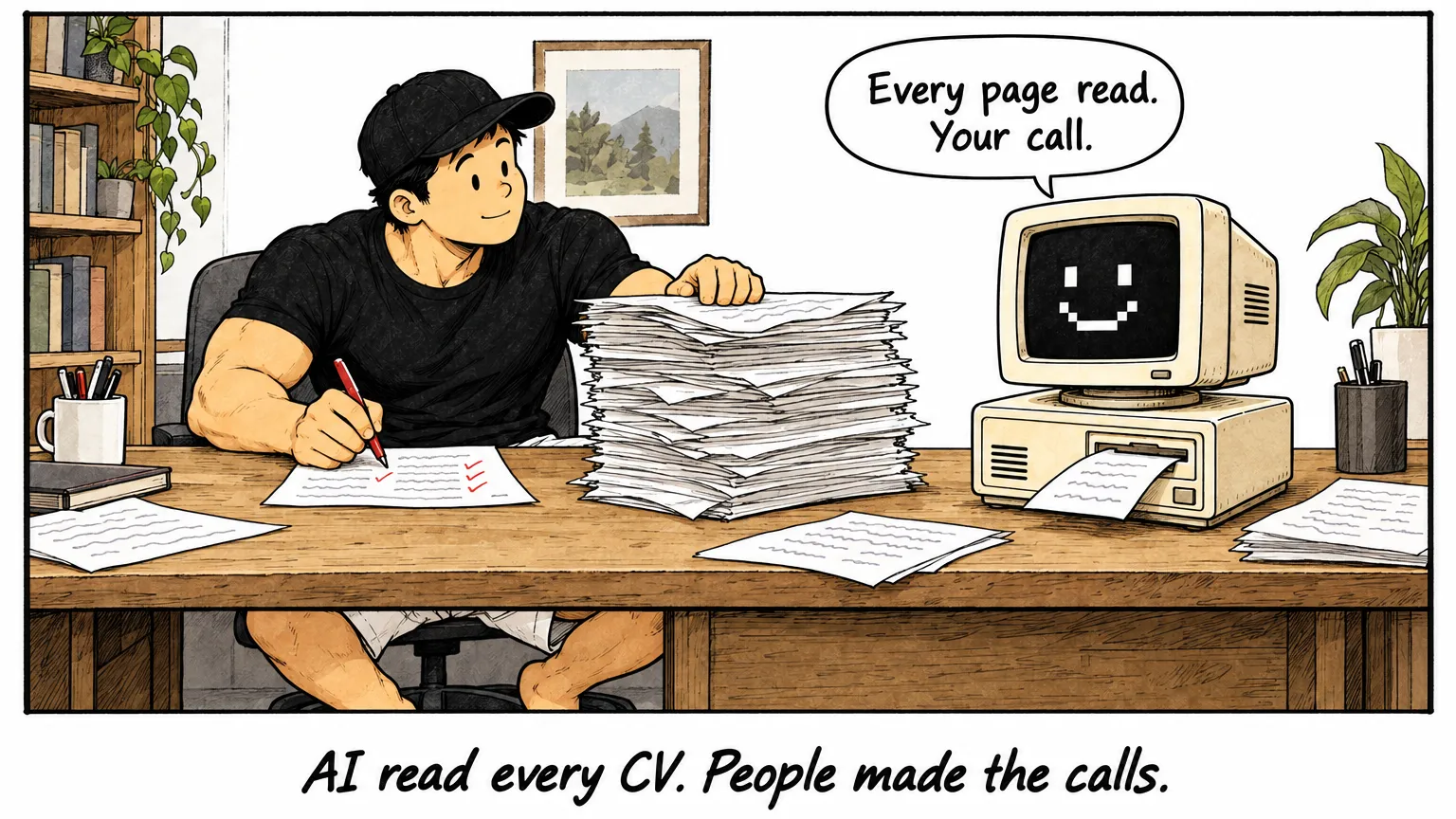
I ran an AI CV screening case for a client in 2026: 300+ applications, scored by Claude against a written role profile. The April round closed on 23 April, a week before the guideline was posted. Applicants were not told AI was used, and I checked a sample of CVs by hand rather than every rejection. Here is how it lines up.
The red dot marks the step a person kept. Red text marks what the next round adds.
Whichever tool you use, run CVs through an account the company controls, on a plan whose terms you have read. The FAQ below covers what OpenAI and Anthropic say about business plans.
What do the transfer and breach rules mean for HR’s AI tools?
If the AI service processes data outside Malaysia, you need a basis for the transfer. If HR data leaks, the breach clock starts. Both questions go to your DPO.
Sending data abroad
The old rule allowed transfers only to places the Minister specified. The 2024 amendment deleted it (Act A1727 s.12). A data controller may now transfer personal data abroad on one of these bases.
Bases for sending personal data abroad, s.129 as amended
- Similar law
- The destination has a law substantially similar to the PDPAs.129(2)(a)
- Adequate protection
- The destination protects data at least as well as the PDPAs.129(2)(b)
- Consent
- The person consented to the transfers.129(3)(a)
- Contract
- The transfer is necessary to perform a contract with the persons.129(3)(b)
- Reasonable precautions
- You took all reasonable precautions and due diligence, such as contract clausess.129(3)(f), transfer guideline para 12.1
The cross-border transfer guideline describes a transfer impact assessment a data controller may use to check a destination (para 5.3). Ask your provider where data is processed. OpenAI’s list of regions where eligible business plans can store data at rest, for example, does not include Malaysia.
When HR data leaks
Under the breach guideline, a breach must be notified when it causes or is likely to cause significant harm, and a breach of sensitive data counts (paras 5.1, 5.2.3). The Act says the Commissioner must be told “as soon as practicable” (s.12B).
The 72 hours start when the company becomes aware of the breach. Para 6.1 counts them “from the occurrence”, and the examples in para 6.2 show what that means: the clock starts when the company is told of a loss, realises it sent data by mistake, or confirms its system was compromised. If an AI provider processes the data for you, it starts when the provider tells you or when you have clear evidence of the breach, whichever is earlier.
- Hour 0You become awareTold, detected or confirmed. The 72 hours start here
- Within 72 hoursNotify the CommissionerAs soon as practicable
- Within 7 days moreNotify affected peopleCounted from the notice to the Commissioner
Who your DPO is
Data controllers and processors must appoint one or more DPOs (s.12A, in force 1 June 2025). The Commissioner’s Circular No. 1 of 2025, in Malay, sets when. The duty applies where processing involves personal data of more than 20,000 people, sensitive personal data including financial information of more than 10,000 people, or regular and systematic monitoring (para 4(1)). The DPO is registered with the Commissioner within 21 days of appointment (para 8(2)).
The ADMP Guideline makes the DPO responsible for the DPIA, so HR needs to know who that is before AI touches hiring.
What should HR settle before AI training?
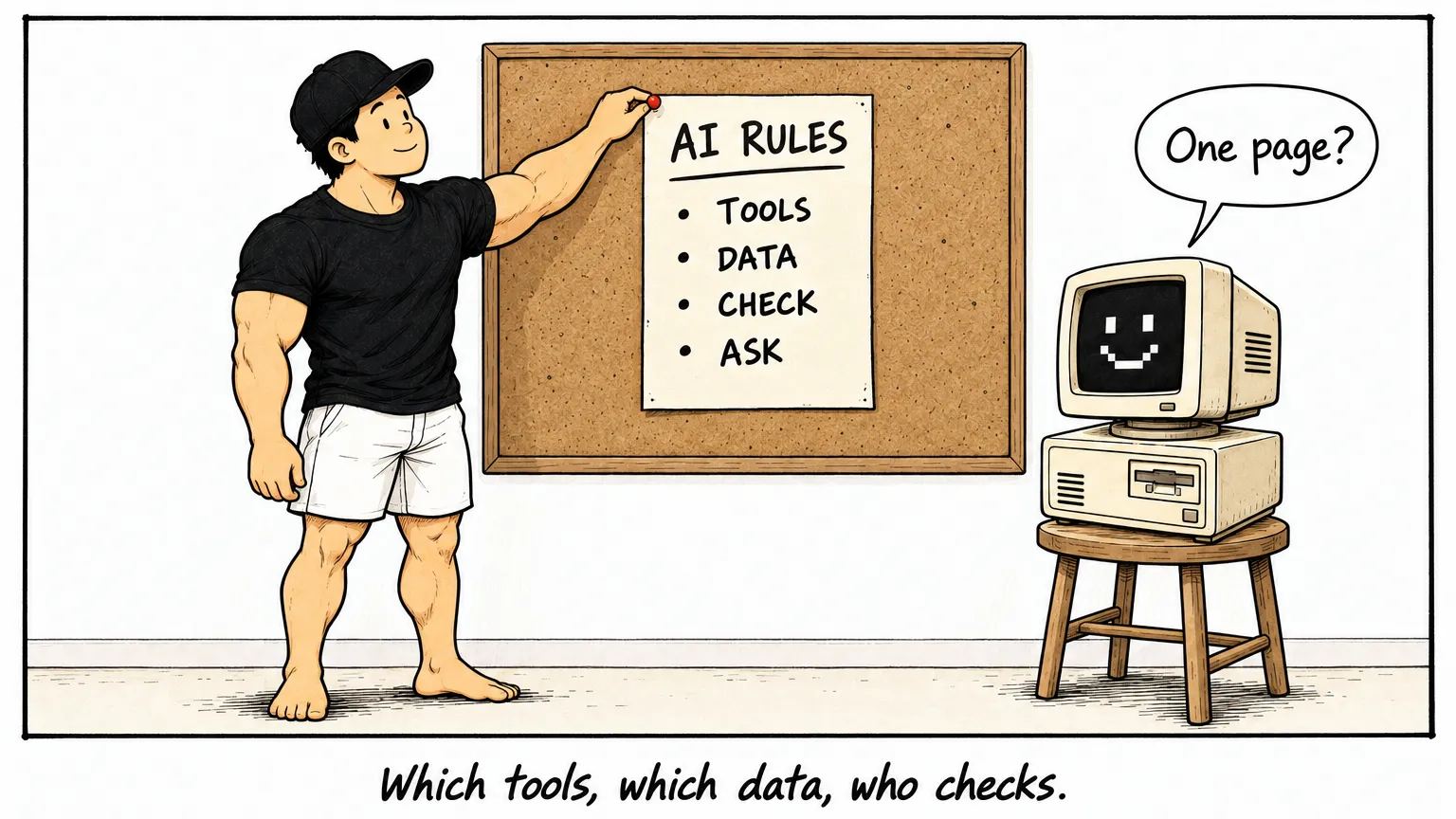
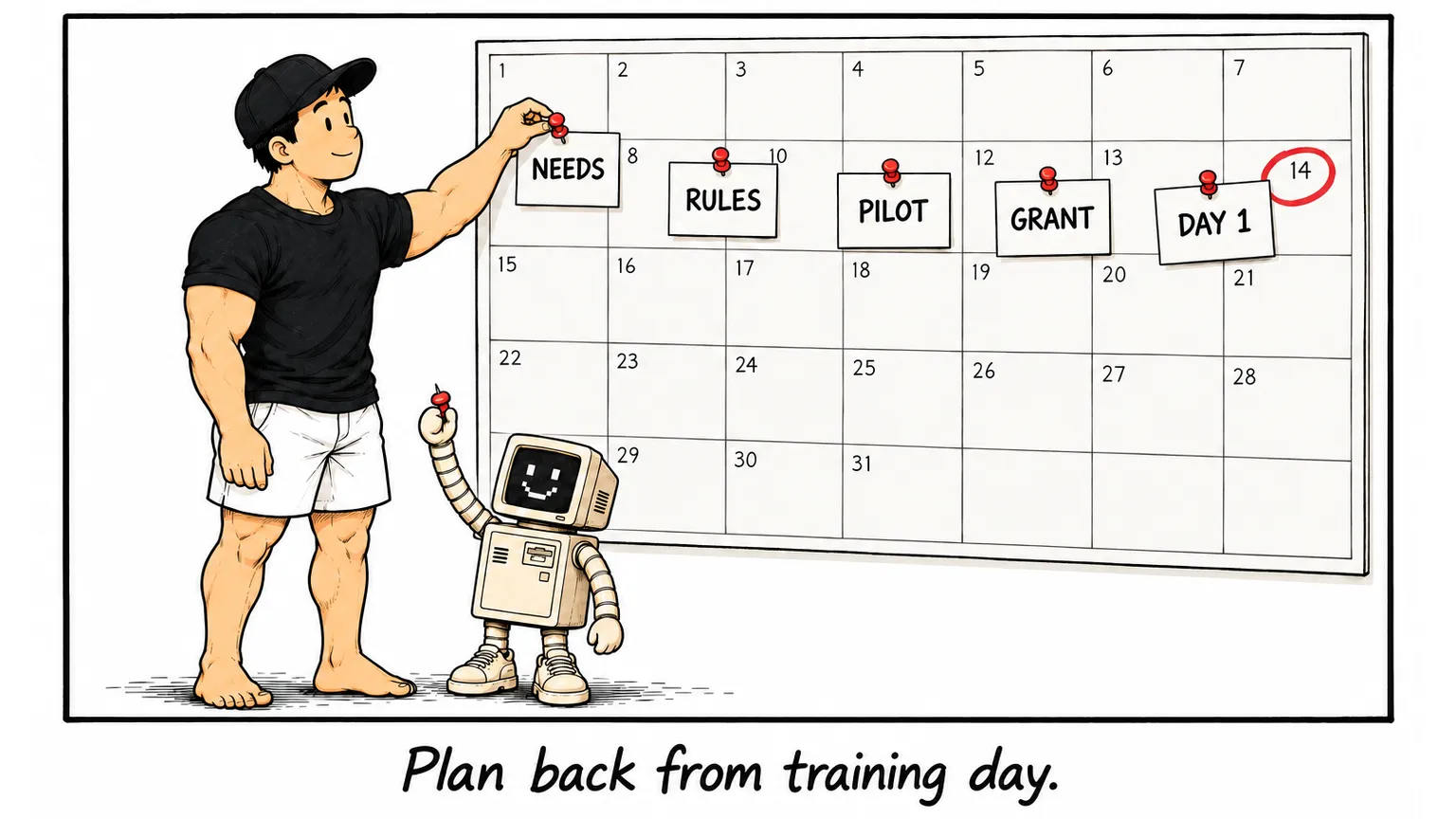
Settle these before your team uses AI on HR work. In my classes, participants bring one non-confidential work example, and connectors to email or drives start read-only or human-reviewed unless the company approves more. HR teams can then train on a real task.
Use this list with your DPO. Ticks stay saved in your browser.
Put these rules in writing with a staff AI policy template. To find which HR tasks touch personal data, map your team’s tasks with a training needs analysis. For the whole rollout, see my AI upskilling plan for employees in Malaysia.
Questions HR asks about PDPA and AI
Is the PDPA mandatory?
Yes, for personal data processed in commercial transactions. The Act applies to anyone who processes personal data in respect of commercial transactions (s.2). It does not apply to the Federal and State Governments (s.3(1)), or to data processed outside Malaysia unless it is meant for further processing in Malaysia (s.3(2)).
Does using AI break privacy law?
There is no AI-specific ban. The PDPA’s seven principles apply to the personal data, and the ADMP Guideline adds expectations where AI ranks, scores or predicts about people.
Which PDPA guidelines matter for AI?
Start with four. The ADMP Guideline, the cross-border transfer guideline, the data breach notification guideline and the Commissioner’s circular on appointing a DPO. All four are linked in the references.
Can we use free ChatGPT or Claude accounts for HR work?
Use an account the company controls. OpenAI says it does not train on inputs or outputs from ChatGPT Business, Enterprise, Edu or its API platform by default. Anthropic says the same of its commercial products, such as Claude for Work and its API. Consumer plans, free ones included, have separate terms.
References
Show all 13 sources
Sources checked 24 Oct 2026. Section and paragraph numbers in the text point to these documents.
- Personal Data Protection Act 2010 (Act 709) (PDF). Application (ss.2, 3), personal data, sensitive personal data, data processor and third party (s.4), the seven principles (ss.5 to 12), sensitive data (s.40), transfers abroad (s.129).
- Personal Data Protection (Amendment) Act 2024 (Act A1727) (PDF). Data controller (s.2), biometric data (s.3), processors and penalties (s.4), DPO and breach notification (s.6, inserting ss.12A and 12B), transfers (s.12).
- Commencement dates of Act A1727, P.U.(B) 522 (PDF). 1 January, 1 April and 1 June 2025.
- Personal Data Protection Department: Automated Decision-Making and Profiling Guideline (ADMP), posted 30 April 2026. The guideline’s page.
- Automated Decision-Making and Profiling Guideline (PDF). Scope (paras 1.1, 10.1), definitions and the HR example (paras 4.1, 4.2), DPIA (paras 1.3, 6.1), threshold (paras 7.1, 7.4.3), notice and bases (paras 9.3, 9.9), AI best practices (para 10.2).
- Cross Border Personal Data Transfer Guideline (PDF), 29 April 2025. Transfer impact assessment (para 5.3), reasonable precautions (para 12.1).
- Data Breach Notification Guideline (PDF), 25 February 2025. Significant harm (paras 5.1, 5.2), 72 hours and when they start (paras 6.1, 6.2), 7 days (para 9.1).
- Commissioner’s Circular No. 1 of 2025: Appointment of Data Protection Officers (PDF, Malay). Who must appoint (para 4(1)), registration within 21 days (para 8(2)).
- National AI Office: AI governance and policy FAQ. No dedicated AI law yet, the proposed AI Governance Bill, and the laws that apply.
- Ministry of Digital: engagement on the proposed AI Governance Bill, 10 July 2026.
- MOSTI: National Guidelines on AI Governance and Ethics (PDF). Launched 20 September 2024.
- OpenAI: Business data privacy, security and compliance. Training defaults for business plans and data residency regions.
- Anthropic: Is my data used for model training? Commercial products, updated 18 August 2026.